Author: ahmad

  • Low Calorie Meals for Weight Loss Eat More, Weigh Less


    Low Calorie Meals for Weight Loss: Eat More, Weigh Less

    When it comes to weight loss, eating fewer calories doesn’t have to mean eating less food. The key is choosing low calorie meals that are filling, nutritious, and satisfying. These meals help you stay in a calorie deficit without hunger, making weight loss much easier to maintain.

    In this article, you’ll discover the best low calorie meal ideas and simple tips to build meals that actually work.


    What Are Low Calorie Meals?

    Low calorie meals are meals that provide:

    • Fewer calories per serving
    • High volume and fiber
    • Lean protein to keep you full

    Most effective low calorie meals are based on whole foods like vegetables, lean proteins, and healthy carbs.


    Why Low Calorie Meals Help with Weight Loss

    Low calorie meals work because they:

    • Reduce daily calorie intake naturally
    • Control hunger and cravings
    • Support fat loss without extreme dieting
    • Are easy to repeat and maintain

    Weight loss becomes sustainable when meals are simple and satisfying.


    Best Low Calorie Meal Ideas for Weight Loss

    1. Grilled Chicken Salad 🥗

    A classic low calorie, high-protein meal.

    Why it works:

    • Lean protein keeps you full
    • Vegetables add volume without many calories

    Add: leafy greens, cucumber, tomatoes, lemon or light dressing.


    2. Egg White & Vegetable Omelet 🍳

    Great for breakfast or a light dinner.

    Benefits:

    • High protein, low fat
    • Keeps hunger away for hours

    Add spinach, onions, mushrooms, and peppers for extra volume.


    3. Zucchini Noodles with Tomato Sauce 🍝

    A low-calorie replacement for pasta.

    Why it’s effective:

    • Very low in calories
    • High in fiber and water

    Top with grilled chicken or shrimp for protein.


    4. Salmon with Steamed Vegetables 🐟

    Healthy fats in moderation can support fat loss.

    Why it works:

    • Omega-3 fats improve metabolism
    • Protein supports muscle maintenance

    Keep portions controlled for best results.


    5. Stir-Fried Vegetables with Tofu or Shrimp 🍤

    Quick, filling, and nutrient-dense.

    Use minimal oil and season with garlic, ginger, and low-sodium soy sauce.


    6. Lettuce Wraps 🥬

    Replace bread or tortillas with lettuce.

    Filling ideas:

    • Ground turkey
    • Chicken breast
    • Black beans and veggies

    Low in calories, high in satisfaction.


    7. Vegetable Soup 🍲

    One of the best low calorie meals for weight loss.

    Why it works:

    • High water content
    • Extremely filling
    • Easy to batch cook

    Broth-based soups are best.


    Tips to Build Your Own Low Calorie Meals

    ✔ Fill half your plate with vegetables
    ✔ Choose lean proteins (chicken, fish, eggs, beans)
    ✔ Limit added oils and sauces
    ✔ Use herbs and spices for flavor
    ✔ Watch portion sizes of carbs and fats


    Foods to Limit When Eating Low Calorie

    Avoid or reduce:

    • Fried foods
    • Creamy sauces
    • Sugary drinks
    • Processed snacks
    • White bread and pastries

    These add calories quickly without filling you up.


    Final Thoughts

    Low calorie meals don’t need to be boring or restrictive. When done right, they help you lose weight while still enjoying food. Focus on volume, protein, and whole ingredients—and stay consistent.

    Weight loss becomes easier when your meals work with you, not against you. 💪
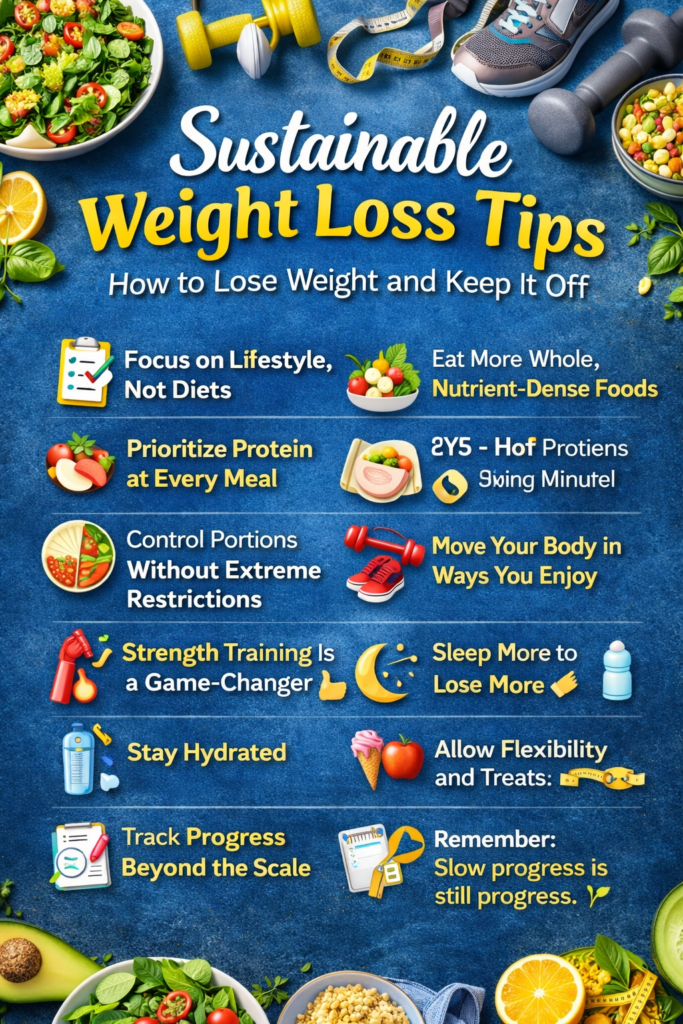

  • Sustainable Weight Loss Tips How to Lose Weight and Keep It Off


    Sustainable Weight Loss Tips How to Lose Weight and Keep It Off

    Most people don’t struggle with losing weight—they struggle with keeping it off. Crash diets and extreme workouts may work short-term, but they often lead to burnout and weight regain. Sustainable weight loss focuses on building habits you can stick with for life.

    Below are proven, realistic tips to help you lose weight in a healthy, lasting way.


    What Is Sustainable Weight Loss?

    Sustainable weight loss means:

    • Gradual fat loss (not extreme dieting)
    • Healthy habits you can maintain long-term
    • Improved energy, health, and confidence

    The goal isn’t perfection—it’s consistency.


    1. Focus on Lifestyle, Not Diets

    Temporary diets give temporary results. Instead of following strict rules:

    • Build healthy eating patterns
    • Allow flexibility and balance
    • Avoid labeling foods as “good” or “bad”

    Weight loss becomes easier when it fits into your life, not the other way around.


    2. Eat More Whole, Nutrient-Dense Foods

    Whole foods help regulate appetite and reduce cravings naturally.

    Focus on:

    • Lean proteins (eggs, chicken, fish, beans)
    • Fruits and vegetables
    • Whole grains (oats, quinoa, brown rice)
    • Healthy fats (avocado, olive oil, nuts)

    These foods keep you full longer and support fat loss.


    3. Prioritize Protein at Every Meal

    Protein is key for sustainable weight loss.

    Benefits:

    • Increases metabolism
    • Reduces hunger
    • Preserves muscle mass

    Aim to include a protein source with every meal to prevent overeating later in the day.


    4. Control Portions Without Extreme Restrictions

    You don’t need to starve to lose weight. Portion awareness makes a big difference.

    Simple tips:

    • Use smaller plates
    • Fill half your plate with vegetables
    • Eat slowly and mindfully

    Small changes add up over time.


    5. Move Your Body in Ways You Enjoy

    Exercise shouldn’t feel like punishment.

    Try:

    • Walking
    • Dancing
    • Strength training
    • Cycling or swimming

    Consistency matters more than intensity. Find movement you enjoy and stay active regularly.


    6. Strength Training Is a Game-Changer 💪

    Building muscle increases your resting metabolism.

    Even 2–3 strength sessions per week can:

    • Burn more calories long-term
    • Improve body shape
    • Prevent weight regain

    You don’t need a gym—bodyweight workouts work too.


    7. Sleep More to Lose More 😴

    Sleep is often overlooked, but it directly affects weight.

    Poor sleep:

    • Increases hunger hormones
    • Triggers cravings
    • Slows metabolism

    Aim for 7–9 hours of quality sleep each night.


    8. Stay Hydrated

    Sometimes hunger is actually thirst.

    Water helps by:

    • Controlling appetite
    • Supporting digestion
    • Boosting metabolism

    Drink water before meals and throughout the day.


    9. Allow Flexibility and Treats

    Sustainable weight loss allows enjoyment.

    • Eat your favorite foods occasionally
    • Follow the 80/20 rule (80% healthy, 20% flexible)
    • Avoid guilt around food

    Restriction leads to binge cycles—balance prevents them.


    10. Track Progress Beyond the Scale

    The scale doesn’t tell the full story.

    Track:

    • Energy levels
    • Body measurements
    • Strength gains
    • How clothes fit

    Non-scale victories matter just as much.


    Common Mistakes to Avoid

    🚫 Skipping meals
    🚫 Cutting carbs completely
    🚫 Over-exercising
    🚫 Expecting fast results
    🚫 Comparing yourself to others

    Sustainable weight loss takes patience—but it works.


    Final Thoughts

    The best weight loss plan is the one you can maintain. Focus on small, consistent habits, not drastic changes. When health becomes the priority, weight loss follows naturally.

    Remember:
    Slow progress is still progress. 🌱


  • Weight Loss Recipes You’ll Love


    Weight Loss Recipes You’ll Love

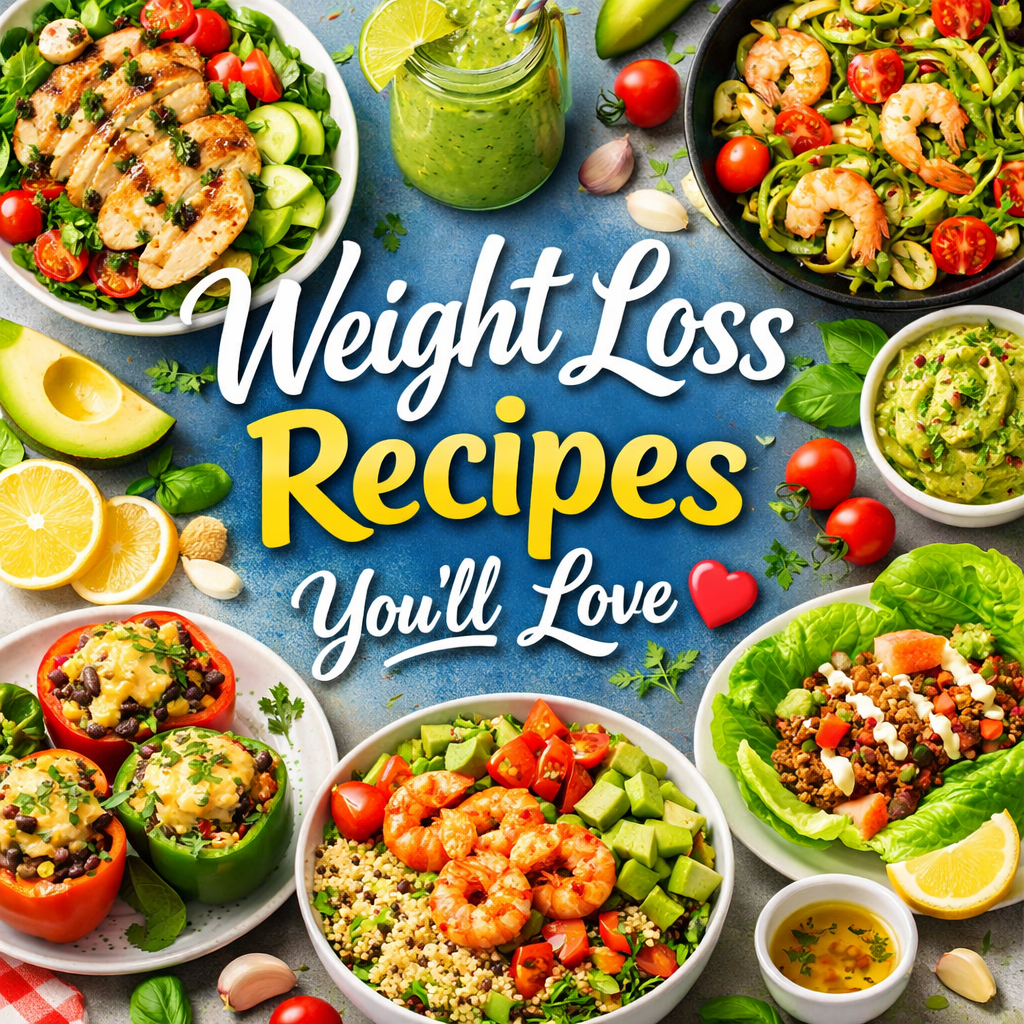
    Losing weight doesn’t mean giving up flavor or eating boring meals every day. In fact, the right recipes can make your weight loss journey enjoyable, satisfying, and sustainable. The secret lies in choosing nutrient-dense ingredients, balanced portions, and recipes that keep you full longer.

    In this article, we’ll share delicious weight loss recipes you’ll love, plus simple tips to help you stay consistent and motivated.


    Why Recipes Matter for Weight Loss

    Many diets fail because they’re too restrictive. When meals taste good and are easy to prepare, you’re more likely to stick with healthy habits long-term. Weight-loss-friendly recipes help by:

    • Controlling calories without sacrificing taste
    • Reducing cravings and emotional eating
    • Supporting steady energy levels throughout the day

    Healthy Breakfast Recipes to Start Your Day Right

    1. Avocado & Egg Toast

    A perfect balance of protein and healthy fats.

    • Whole-grain bread
    • Mashed avocado with lemon juice
    • One boiled or poached egg

    Why you’ll love it: Keeps you full for hours and prevents mid-morning snacking.


    2. Berry Greek Yogurt Bowl

    • Low-fat Greek yogurt
    • Mixed berries (strawberries, blueberries)
    • Chia or flax seeds

    Why it works: High protein + fiber = fewer cravings later.


    Light & Filling Lunch Recipes

    3. Grilled Chicken Salad

    • Grilled chicken breast
    • Leafy greens (spinach, lettuce)
    • Cucumbers, tomatoes, olive oil & lemon dressing

    Weight-loss tip: Avoid heavy sauces—simple dressings go a long way.


    4. Veggie Wrap with Hummus

    • Whole-wheat tortilla
    • Roasted vegetables
    • A spoon of hummus

    Why you’ll love it: Flavor-packed and under control calorie-wise.


    Dinner Recipes That Won’t Ruin Your Diet

    5. Baked Salmon with Steamed Veggies

    • Salmon filet
    • Broccoli or green beans
    • Lemon, garlic, and herbs

    Benefits: Rich in omega-3 fats that support fat loss and heart health.


    6. Zucchini Noodles with Tomato Sauce

    • Spiralized zucchini
    • Homemade tomato sauce
    • Lean ground turkey or mushrooms

    Why it’s great: A low-carb alternative to pasta that still feels indulgent.


    Healthy Snacks & Desserts

    7. Apple Slices with Peanut Butter

    • Fresh apple slices
    • 1 tablespoon natural peanut butter

    Sweet, crunchy, and satisfying.


    8. Dark Chocolate & Almonds

    Yes, dessert is allowed!

    • A few almonds
    • 1–2 squares of dark chocolate (70%+ cocoa)

    Portion control is the key.


    Tips to Make Weight Loss Recipes Work

    • Cook at home as often as possible
    • Focus on protein and fiber in every meal
    • Watch portion sizes, even with healthy foods
    • Drink enough water throughout the day

    Final Thoughts

    Weight loss doesn’t have to feel like punishment. With the right recipes, you can enjoy every meal while still moving toward your goals. These weight loss recipes you’ll love are easy, flavorful, and designed to fit into real life—not just a short-term diet.

    https://www.advancedbionutritionals.com/DS24/Advanced-Amino/Muscle-Mass-Loss/HD.htm#aff=BengtululStart small, stay consistent, and remember: healthy eating should be enjoyable, not stressful 💚


  • Diet Tips to Lose Weight Fast (Healthy & Sustainable)

    Diet Tips to Lose Weight Fast (Healthy & Sustainable)

    Losing weight fast doesn’t mean starving yourself or following extreme fad diets. The key is making smart food choices that help your body burn fat while staying healthy and energized. Below are proven diet tips that can help you lose weight faster without damaging your metabolism.


    1. Focus on Whole, Unprocessed Foods

    Whole foods are naturally low in calories and high in nutrients. Replace packaged snacks and fast food with:

    • Fresh fruits and vegetables
    • Lean proteins (chicken, fish, eggs, tofu)
    • Whole grains (oats, brown rice, quinoa)

    These foods keep you full for longer and reduce unnecessary calorie intake.


    2. Increase Protein Intake

    Protein plays a major role in fat loss. It boosts metabolism and controls hunger hormones.

    • Eat protein at every meal
    • Choose eggs, Greek yogurt, lean meats, beans, or protein shakes
    • Protein helps preserve muscle while losing fat

    3. Cut Back on Sugar and Refined Carbs

    Sugar is one of the biggest obstacles to fast weight loss. Reduce or eliminate:

    • Soft drinks and sweetened juices
    • White bread, pastries, and candy
    • Sugary cereals and desserts

    Instead, choose complex carbs like vegetables and whole grains.


    4. Stay Hydrated Throughout the Day

    Drinking water helps suppress appetite and improves fat burning.

    • Drink a glass of water before meals
    • Replace sugary drinks with water or green tea
    • Aim for 2–3 liters daily

    Hydration alone can significantly support faster weight loss.


    5. Control Portion Sizes

    You don’t need to eat less—just eat smarter.

    • Use smaller plates
    • Eat slowly and mindfully
    • Stop eating when you’re 80% full

    Portion control helps reduce calories without feeling deprived.


    6. Eat More Fiber-Rich Foods

    Fiber improves digestion and keeps you full longer.

    • Vegetables, fruits, chia seeds, oats
    • Legumes like lentils and beans
    • Fiber stabilizes blood sugar levels and reduces cravings

    7. Avoid Late-Night Snacking

    Eating late at night often leads to unnecessary calorie consumption.

    • Set a cut-off time for meals
    • Drink herbal tea if cravings hit
    • Prioritize a protein-rich dinner to stay full

    8. Plan Your Meals in Advance

    Meal planning prevents unhealthy food choices.

    • Prepare meals at home
    • Keep healthy snacks available
    • Track your calories if needed

    Consistency is the secret to fast and lasting weight loss.


    Final Thoughts

    Fast weight loss is possible when you follow a balanced, nutrient-rich diet and avoid extreme restrictions. Focus on protein, fiber, hydration, and portion control, and you’ll see results quickly—while still feeling healthy and energized.

  • Weight Loss Made Simple The No-Nonsense Guide to Losing Weight and Keeping It Off


    Weight Loss Made Simple

    Weight loss doesn’t have to be confusing, stressful, or extreme. You don’t need crash diets, expensive supplements, or hours at the gym. When you focus on simple habits and consistency, weight loss becomes much easier—and more sustainable.

    1. Focus on Simple Food Choices

    You don’t need to count every calorie. Start by choosing real, whole foods:

    • Eat more vegetables and fruits
    • Choose lean proteins like eggs, chicken, fish, or beans
    • Reduce sugar, junk food, and processed snacks

    A simple rule: if it looks natural and fresh, it’s usually a better choice.

    2. Control Portions, Not Pleasure

    Weight loss doesn’t mean starving yourself. You can still enjoy your favorite foods—just in smaller portions. Use smaller plates, eat slowly, and stop eating when you feel satisfied, not stuffed.

    3. Drink More Water

    Many people confuse thirst with hunger. Drinking enough water:

    • Reduces unnecessary snacking
    • Boosts metabolism
    • Helps with digestion

    Try drinking a glass of water before meals—it’s a simple habit with big benefits.

    4. Move Your Body Daily

    You don’t need intense workouts. Simple movement works:

    • Walking 20–30 minutes a day
    • Taking stairs instead of elevators
    • Light home exercises

    Consistency matters more than intensity.

    5. Get Enough Sleep

    Poor sleep slows weight loss and increases cravings for sugary foods. Aim for 7–8 hours of sleep each night. Good rest helps balance hormones that control hunger.

    6. Be Patient and Consistent

    Healthy weight loss takes time. Don’t expect overnight results. Small daily actions lead to long-term success. Stay consistent, even on days when progress feels slow.

    Conclusion

    Weight loss becomes simple when you stop chasing shortcuts and start building healthy habits. Eat better, move more, drink water, sleep well, and stay consistent. These small steps add up—and they work.

    Simple habits. Real results. Sustainable weight loss.

  • Weight Loss Meal Plan


    Weight Loss Meal Plan

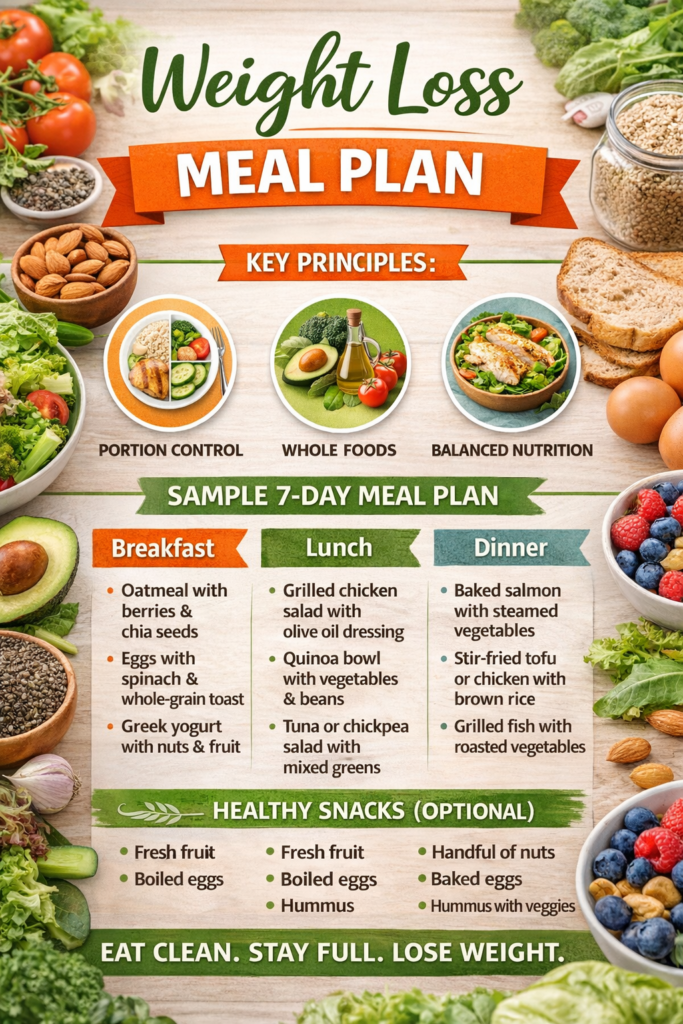
    A weight loss meal plan helps you stay consistent, control portions, and make healthier food choices without feeling restricted. Instead of extreme diets, a balanced meal plan focuses on nutrient-dense foods that support fat loss, energy, and long-term results.

    Why a Meal Plan Matters for Weight Loss

    Planning meals in advance removes guesswork and reduces the temptation to choose unhealthy options. It ensures balanced nutrition, stable blood sugar levels, and proper calorie control, which are key factors for sustainable weight loss.

    Key Principles of a Weight Loss Meal Plan

    A successful meal plan is not about eating less—it’s about eating smarter.

    1. Balanced Macronutrients

    Each meal should include:

    • Protein to keep you full and preserve muscle
    • Complex carbohydrates for sustained energy
    • Healthy fats for satiety and hormone balance

    2. Focus on Whole Foods

    Choose minimally processed foods such as vegetables, fruits, whole grains, lean proteins, and healthy fats. These foods are lower in calories but higher in nutrients.

    3. Portion Control

    Even healthy foods can cause weight gain if portions are too large. Using smaller plates and measuring portions can help manage calorie intake effectively.

    Sample 7-Day Weight Loss Meal Plan

    Breakfast Options

    • Oatmeal with berries and chia seeds
    • Eggs with spinach and whole-grain toast
    • Greek yogurt with nuts and fruit

    Lunch Options

    • Grilled chicken salad with olive oil dressing
    • Quinoa bowl with vegetables and beans
    • Tuna or chickpea salad with mixed greens

    Dinner Options

    • Baked salmon with steamed vegetables
    • Stir-fried tofu or chicken with brown rice
    • Grilled fish with roasted vegetables

    Healthy Snacks (Optional)

    • Fresh fruit
    • Handful of nuts
    • Boiled eggs
    • Hummus with vegetables

    Hydration and Beverages

    Drink plenty of water throughout the day. Limit sugary drinks and opt for water, herbal teas, or black coffee without added sugar.

    Tips to Stick to Your Meal Plan

    • Prepare meals in advance
    • Keep healthy snacks available
    • Eat slowly and mindfully
    • Allow flexibility to avoid burnout

    Common Mistakes to Avoid

    • Skipping meals
    • Relying on processed “diet” foods
    • Cutting calories too aggressively
    • Ignoring protein intake

    Conclusion

    A weight loss meal plan is a practical and sustainable approach to achieving your health goals. By focusing on balanced nutrition, whole foods, and realistic habits, you can lose weight effectively while maintaining energy and overall well-being.


  • Healthy Eating for Weight Loss


    Healthy Eating for Weight Loss

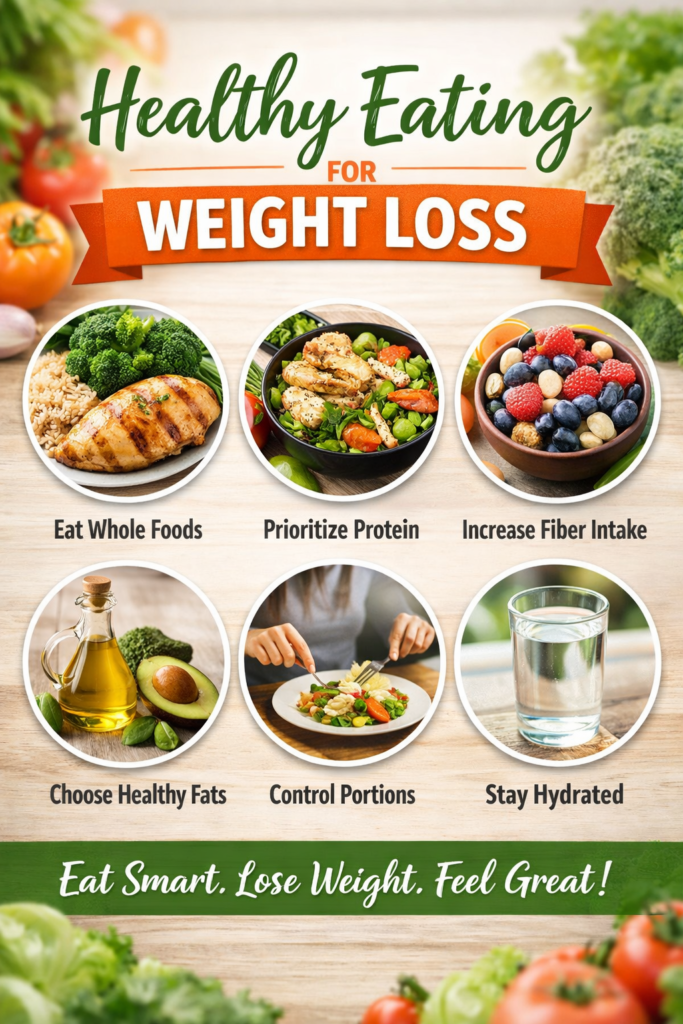
    Losing weight does not require extreme dieting or cutting out entire food groups. Healthy eating for weight loss is about creating balanced meals, developing sustainable habits, and making smarter food choices that nourish your body while helping you maintain a calorie deficit.

    Focus on Whole, Nutrient-Dense Foods

    Whole foods should be the foundation of any healthy weight-loss plan. These include vegetables, fruits, whole grains, lean proteins, and healthy fats. They are rich in nutrients, high in fiber, and naturally more filling, which helps control hunger and reduce overeating.

    Examples include leafy greens, berries, oats, brown rice, eggs, fish, chicken, beans, nuts, and seeds.

    Prioritize Protein in Every Meal

    Protein plays a key role in weight loss by increasing fullness, preserving muscle mass, and boosting metabolism. Including a source of protein in each meal can help reduce cravings and prevent unnecessary snacking.

    Good protein sources include eggs, lean meats, fish, Greek yogurt, tofu, lentils, and beans.

    Eat More Fiber-Rich Foods

    Fiber slows digestion and helps you feel full for longer periods. A high-fiber diet also supports gut health and stabilizes blood sugar levels.

    Foods high in fiber include vegetables, fruits with skin, legumes, whole grains, chia seeds, and flaxseeds.

    Choose Healthy Fats in Moderation

    Healthy fats are essential for hormone balance and overall health, but portion control is important. Including small amounts of healthy fats can improve satiety and make meals more satisfying.

    Sources of healthy fats include avocados, olive oil, nuts, seeds, and fatty fish like salmon.

    Control Portions Mindfully

    Healthy foods still contain calories, so portion control matters. Eating slowly, using smaller plates, and paying attention to hunger and fullness cues can help prevent overeating without feeling restricted.

    Reduce Added Sugars and Processed Foods

    Highly processed foods and sugary drinks are calorie-dense and low in nutrients. They often lead to spikes in blood sugar and increased cravings. Limiting sweets, fast food, and packaged snacks can significantly improve weight-loss results.

    Stay Hydrated

    Drinking enough water supports digestion, reduces hunger, and helps prevent confusing thirst with hunger. Starting meals with a glass of water can also help with portion control.

    Build Consistent, Sustainable Habits

    Weight loss is not about perfection—it’s about consistency. Planning meals ahead, cooking at home, and allowing occasional treats can help you stay on track long term without feeling deprived.

    Conclusion

    Healthy eating for weight loss focuses on balance, nutrition, and sustainability rather than strict rules or quick fixes. By choosing whole foods, prioritizing protein and fiber, managing portions, and staying consistent, you can lose weight in a healthy and maintainable way that supports overall well-being.


  • Proven Weight Loss Strategies That Actually Work


    Proven Weight Loss Strategies That Actually Work

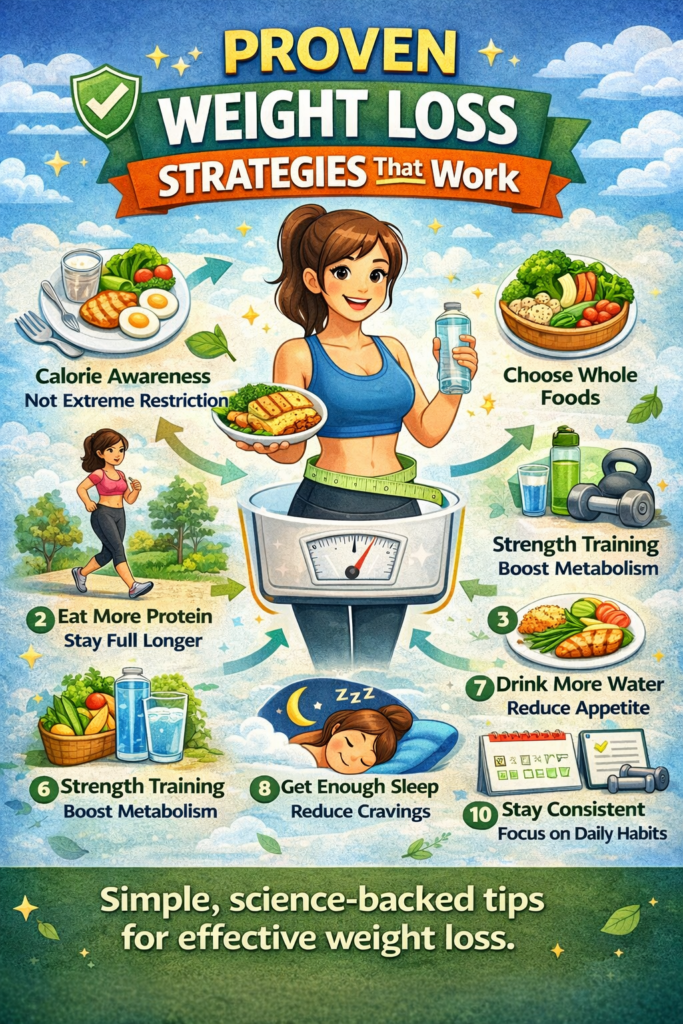
    Weight loss can feel confusing with so much conflicting advice online. From extreme diets to miracle pills, many methods promise fast results but fail long term. The truth is, proven weight loss strategies are simple, sustainable, and science-backed.

    Here are effective strategies that truly work.


    1. Focus on Calorie Awareness, Not Extreme Restriction

    Weight loss happens when you burn more calories than you consume—but that doesn’t mean starving. Understanding portion sizes and eating mindfully helps you stay in a healthy calorie range without feeling deprived.


    2. Eat More Protein

    Protein reduces hunger, preserves muscle, and increases metabolism. Adding protein to every meal helps you stay full longer.
    Good sources include:

    • Eggs
    • Lean meat and fish
    • Beans and lentils
    • Greek yogurt

    3. Choose Whole, Unprocessed Foods

    Whole foods are naturally lower in calories and higher in nutrients. Focus on:

    • Vegetables and fruits
    • Whole grains
    • Healthy fats
    • Lean protein

    Avoid heavily processed foods high in sugar and refined carbs.


    4. Increase Daily Movement

    You don’t need intense workouts to lose weight. Simple activities like:

    • Walking daily
    • Taking stairs
    • Light home workouts

    Consistency matters more than intensity.


    5. Strength Training Matters

    Lifting weights or doing bodyweight exercises builds muscle, which boosts metabolism and helps you burn more calories—even at rest.


    6. Control Portions the Smart Way

    You don’t have to give up your favorite foods. Use smaller plates, eat slowly, and listen to your hunger cues. Stop eating when you feel comfortably full, not stuffed.


    7. Drink More Water

    Drinking water before meals can reduce appetite. Staying hydrated also improves digestion and energy levels.


    8. Prioritize Sleep and Stress Management

    Poor sleep and high stress increase hunger hormones and cravings. Aim for 7–9 hours of sleep and find stress-relieving activities such as walking, meditation, or reading.


    9. Stay Consistent, Not Perfect

    Consistency beats perfection. Small, healthy habits practiced daily lead to long-term weight loss and better health.


    10. Track Progress Beyond the Scale

    The scale doesn’t tell the full story. Track:

    • How your clothes fit
    • Energy levels
    • Strength and endurance

    Non-scale victories matter.


    Final Thoughts

    Proven weight loss strategies focus on creating healthy habits you can maintain for life. There’s no quick fix—but with patience, consistency, and smart choices, lasting weight loss is possible.


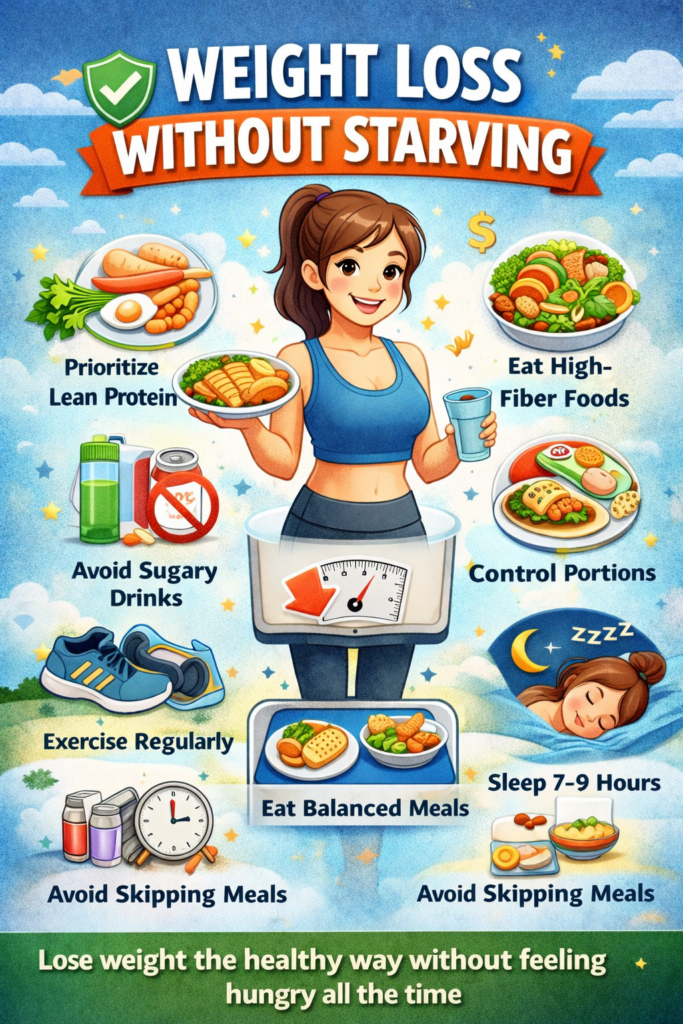
  • Weight Loss Without Starving How to Lose Weight the Healthy Way


    Weight Loss Without Starving: How to Lose Weight the Healthy Way

    Many people believe that losing weight means skipping meals, eating tiny portions, or feeling hungry all the time. The truth is, healthy weight loss does not require starvation. In fact, starving yourself can slow your metabolism, increase cravings, and lead to weight gain in the long run.

    Let’s explore how you can lose weight effectively without starving your body.


    1. Eat More, but Eat Smart

    Weight loss isn’t about eating less food—it’s about eating the right foods. Focus on whole, nutrient-dense foods such as:

    • Lean proteins (eggs, chicken, fish, beans)
    • Vegetables and fruits
    • Whole grains
    • Healthy fats (nuts, olive oil, avocado)

    These foods keep you full longer and reduce unnecessary snacking.


    2. Prioritize Protein at Every Meal

    Protein helps control hunger and boosts metabolism. Meals rich in protein keep you satisfied and reduce cravings.
    Good protein sources include:

    • Eggs
    • Greek yogurt
    • Lentils and chickpeas
    • Fish and lean meat

    3. Avoid Liquid Calories

    Sugary drinks, soda, and sweetened coffee add calories but don’t fill you up. Replace them with:

    • Water
    • Green tea
    • Black coffee
    • Herbal tea

    Drinking more water can naturally reduce appetite.


    4. Control Portions Without Extreme Dieting

    You don’t need to cut out your favorite foods completely. Instead:

    • Use smaller plates
    • Eat slowly
    • Stop eating when you’re about 80% full

    This helps you enjoy food while still losing weight.


    5. Choose High-Fiber Foods

    Fiber slows digestion and keeps you full longer. Add more:

    • Oats
    • Vegetables
    • Seeds and legumes
    • Fruits with skin

    Fiber also improves digestion and gut health.


    6. Get Enough Sleep

    Lack of sleep increases hunger hormones and cravings. Aim for 7–9 hours of sleep each night to support weight loss naturally.


    7. Exercise Without Overdoing It

    You don’t need intense workouts to lose weight. Simple activities like:

    • Walking
    • Light strength training
    • Home workouts

    Consistency matters more than intensity.


    8. Eat Regular Meals

    Skipping meals often leads to overeating later. Eating balanced meals at regular times keeps blood sugar stable and prevents binge eating.


    Final Thoughts

    Weight loss doesn’t mean starving yourself. By eating nourishing foods, staying consistent, and listening to your body, you can lose weight in a healthy and sustainable way. Remember, the goal is progress, not perfection.


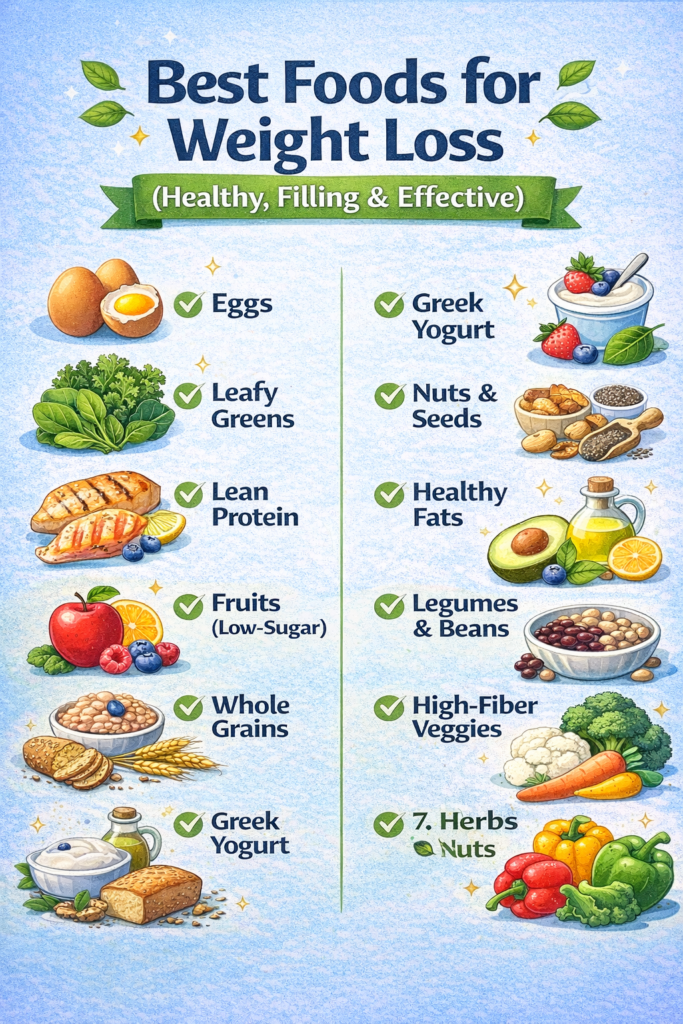
  • Best Foods for Weight Loss (Healthy, Filling & Effective)


    Weight loss doesn’t mean eating less—it means eating smarter. The best foods for weight loss help you stay full, control cravings, and fuel your body while burning fat naturally.

    In this article, you’ll discover nutrient-dense foods that support healthy and sustainable weight loss.


    1. Eggs

    Eggs are one of the best foods for weight loss.

    Why they help:

    • High in protein
    • Keep you full for hours
    • Reduce calorie intake later in the day

    Enjoy eggs boiled, scrambled, or as an omelet with vegetables.


    2. Leafy Green Vegetables

    Leafy greens are low in calories and high in fiber.

    Best options:

    • Spinach
    • Kale
    • Lettuce
    • Cabbage

    They add volume to meals without adding extra calories.


    3. Lean Protein Sources

    Protein is essential for fat loss and muscle preservation.

    Great choices:

    • Chicken breast
    • Fish (salmon, tuna)
    • Turkey
    • Tofu
    • Lentils

    Protein reduces hunger and boosts metabolism.


    4. Fruits (Low-Sugar Options)

    Fruits provide fiber, vitamins, and natural sweetness.

    Best fruits for weight loss:

    • Apples
    • Berries
    • Oranges
    • Grapefruit

    Eat whole fruits instead of juices.


    5. Whole Grains

    Whole grains digest slowly and keep you full.

    Healthy options:

    • Oats
    • Brown rice
    • Quinoa
    • Whole-grain bread

    They help prevent overeating.


    6. Greek Yogurt

    Greek yogurt is rich in protein and probiotics.

    Benefits:

    • Improves digestion
    • Keeps you full
    • Helps control cravings

    Choose plain, unsweetened versions.


    7. Nuts and Seeds (In Moderation)

    Despite being calorie-dense, nuts and seeds aid weight loss when eaten in small amounts.

    Best options:

    • Almonds
    • Walnuts
    • Chia seeds
    • Flaxseeds

    They provide healthy fats and long-lasting energy.


    8. Healthy Fats

    Healthy fats support hormone balance and fat burning.

    Include:

    • Avocados
    • Olive oil
    • Fatty fish

    Avoid trans fats and deep-fried foods.


    9. Legumes and Beans

    Beans and legumes are excellent for weight loss.

    Examples:

    • Chickpeas
    • Black beans
    • Kidney beans
    • Lentils

    They’re high in protein and fiber, making meals more satisfying.


    10. Vegetables with High Fiber

    Fiber slows digestion and controls appetite.

    Top choices:

    • Broccoli
    • Carrots
    • Cauliflower
    • Bell peppers

    Add vegetables to every meal.


    Foods to Limit for Weight Loss

    ❌ Sugary drinks
    ❌ White bread and pastries
    ❌ Processed snacks
    ❌ Fried foods

    Reducing these improves fat loss results.


    Final Thoughts

    Weight loss isn’t about starving—it’s about choosing foods that work with your body. When you fill your plate with high-protein, high-fiber, whole foods, weight loss becomes easier and more sustainable.

    Eat smart. Stay consistent. Results will follow 💪