Author: ahmad

  • Best Weight Loss Methods That Actually Work (Healthy & Sustainable)


    Weight loss doesn’t have to mean extreme dieting, exhausting workouts, or giving up your favorite foods. The best weight loss methods are those you can stick to long term while improving your overall health.
    This article covers proven, sustainable methods that help you lose weight in a healthy way.


    1. Create a Small Calorie Deficit

    Weight loss happens when you burn more calories than you consume—but extreme calorie cutting backfires.

    ✔ Aim for a small, steady deficit
    ✔ Eat filling, nutrient-dense foods
    ✔ Avoid crash diets

    Slow weight loss = lasting results.


    2. Eat More Protein

    Protein is one of the most effective tools for weight loss.

    Why protein helps:

    • Reduces hunger and cravings
    • Preserves muscle
    • Boosts metabolism

    Good sources include eggs, lean meats, fish, beans, tofu, and Greek yogurt.


    3. Focus on Whole Foods

    Whole foods help control appetite and improve energy.

    Choose:

    • Vegetables and fruits
    • Whole grains
    • Healthy fats (nuts, olive oil)
    • Lean protein

    Limit:

    • Sugary drinks
    • Processed snacks
    • Fast food

    4. Move Your Body Every Day

    You don’t need intense workouts to lose weight.

    Effective activities:

    • Walking 30–45 minutes
    • Cycling
    • Home workouts
    • Dancing

    Consistency matters more than intensity.


    5. Include Strength Training

    Muscle helps your body burn more calories even at rest.

    Beginner-friendly strength training:

    • Bodyweight exercises
    • Resistance bands
    • Light weights

    👉 2–3 sessions per week is enough.


    6. Stay Hydrated

    Drinking water helps reduce overeating and supports metabolism.

    💧 Tip: Drink a glass of water before meals.


    7. Sleep Enough

    Lack of sleep increases hunger hormones and cravings.

    ✔ 7–9 hours per night
    ✔ Consistent sleep routine

    Better sleep = easier weight loss.


    8. Manage Stress

    High stress leads to emotional eating and fat storage.

    Stress-reduction ideas:

    • Walking
    • Meditation
    • Journaling
    • Breathing exercises

    9. Be Patient and Consistent

    Healthy weight loss is not a race.

    Expect:

    • Slow progress
    • Occasional plateaus
    • Long-term success with consistency

    Sustainable habits beat quick fixes.


    10. Avoid Common Weight Loss Mistakes

    ❌ Skipping meals
    ❌ Cutting out all carbs or fats
    ❌ Overdoing cardio
    ❌ Expecting instant results


    Final Thoughts

    The best weight loss methods are simple, realistic, and sustainable. When you focus on healthy habits instead of quick results, weight loss becomes a natural outcome.

    Start small. Stay consistent. Trust the process 💪


    If you want:
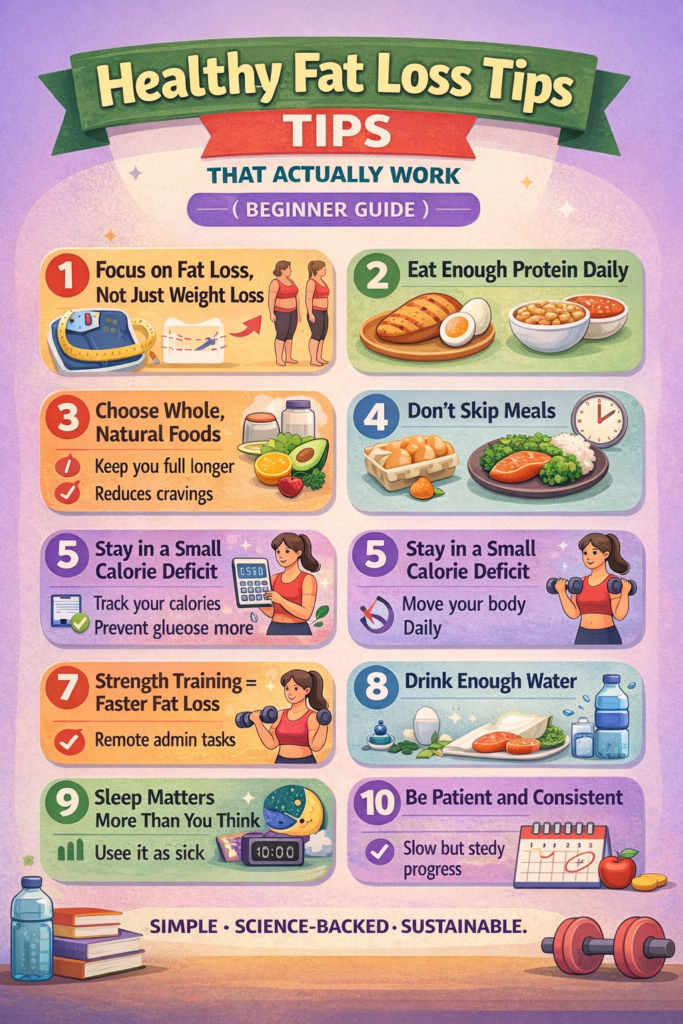
  • Healthy Fat Loss Tips That Actually Work (Beginner Guide)


    Healthy Fat Loss Tips That Actually Work (Beginner Guide)


    1. Focus on Fat Loss, Not Just Weight Loss

    The scale doesn’t always tell the full story. You can lose fat while gaining muscle and still look healthier—even if your weight stays the same.

    ✔ Measure progress with:

    • Body measurements
    • How clothes fit
    • Energy levels
    • Progress photos

    Fat loss = better health, not just a lower number.


    2. Eat Enough Protein Daily

    Protein is essential for burning fat and preserving muscle.

    Benefits of protein:

    • Keeps you full longer
    • Reduces cravings
    • Boosts metabolism

    Good protein sources:

    • Eggs
    • Chicken, fish
    • Beans & lentils
    • Greek yogurt
    • Tofu

    Aim for protein in every meal.


    3. Choose Whole, Natural Foods

    Highly processed foods slow fat loss and increase cravings.

    Choose:

    • Vegetables & fruits
    • Whole grains
    • Healthy fats (avocado, olive oil, nuts)
    • Lean proteins

    🛑 Reduce sugary drinks, fried foods, and packaged snacks.


    4. Don’t Skip Meals

    Skipping meals may seem like a shortcut, but it often leads to overeating later.

    Instead:

    • Eat balanced meals
    • Include protein + fiber
    • Keep blood sugar stable

    Consistency beats fasting without a plan.


    5. Stay in a Small Calorie Deficit

    You don’t need to starve to lose fat.

    Healthy fat loss happens when:

    • You burn slightly more calories than you eat
    • You eat nourishing foods

    A small deficit is more sustainable and prevents muscle loss.


    6. Move Your Body Daily

    You don’t need a gym to burn fat.

    Simple daily movements:

    • Walking 30–45 minutes
    • Home workouts
    • Cycling
    • Dancing

    👉 Walking is one of the best fat-burning exercises for beginners.


    7. Strength Training = Faster Fat Loss

    Building muscle helps your body burn more calories even at rest.

    Beginner-friendly options:

    • Bodyweight exercises
    • Resistance bands
    • Light dumbbells

    2–3 sessions per week is enough.


    8. Drink Enough Water

    Water helps with:

    • Reducing hunger
    • Digestion
    • Fat metabolism

    💧 Drink water before meals to avoid overeating.


    9. Sleep Matters More Than You Think

    Poor sleep increases hunger hormones and cravings.

    Aim for:

    • 7–9 hours per night
    • Consistent sleep schedule
    • Limited phone use before bed

    Fat loss is harder without proper rest.


    10. Be Patient and Consistent

    Healthy fat loss is a long-term lifestyle, not a quick fix.

    Expect:

    • Slow but steady progress
    • Occasional plateaus
    • Better energy & confidence

    Small steps done daily = big results.


    Common Fat Loss Mistakes to Avoid

    ❌ Extreme dieting
    ❌ Eliminating all carbs or fats
    ❌ Overdoing cardio
    ❌ Expecting overnight results


    Final Thoughts

    Healthy fat loss is not about suffering—it’s about balance, consistency, and self-care. When you focus on nourishing your body and moving regularly, fat loss becomes a natural side effect of a healthy lifestyle.

    Start small. Stay consistent.

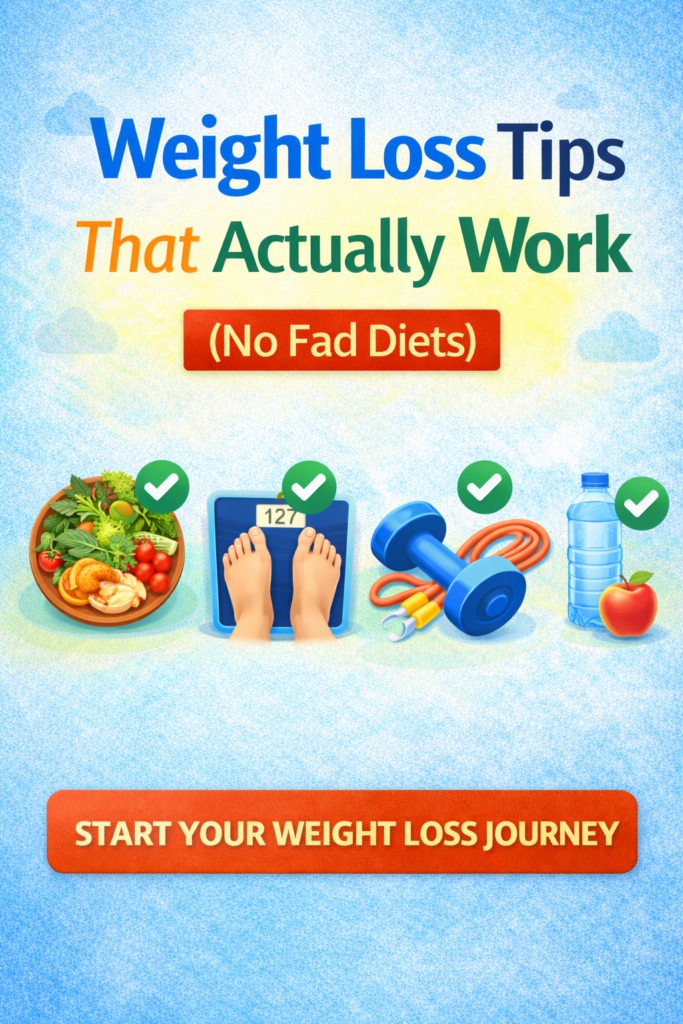
  • Weight Loss Tips That Actually Work (No Fad Diets)


    Weight Loss Tips That Actually Work (No Fad Diets)

    Losing weight can feel confusing with so many diets, workouts, and “quick fixes” everywhere. The truth is, weight loss doesn’t need to be extreme. It works best when you follow simple, consistent habits that fit your lifestyle.

    Here are real weight loss tips that actually work and can help you lose fat in a healthy, sustainable way.


    1. Focus on Food Quality, Not Just Calories

    You don’t need to starve yourself to lose weight. Instead, eat whole, nutritious foods that keep you full longer.

    Best foods for weight loss:

    • Vegetables and fruits
    • Lean protein (eggs, chicken, fish, lentils)
    • Whole grains (brown rice, oats)
    • Healthy fats (nuts, olive oil, avocado)

    These foods reduce cravings and help control hunger naturally.


    2. Add More Protein to Your Meals

    Protein helps burn fat and reduces appetite.

    Benefits of protein:

    • Keeps you full longer
    • Reduces snacking
    • Helps preserve muscle

    Aim to include protein in every meal, especially breakfast.


    3. Move Your Body Daily (No Gym Required)

    Exercise doesn’t have to be intense or complicated.

    Simple ways to burn fat:

    • Walking 20–30 minutes daily
    • Home workouts
    • Bodyweight exercises
    • Stretching or yoga

    Consistency matters more than intensity.


    4. Drink More Water

    Many people confuse thirst with hunger.

    Water helps:

    • Control appetite
    • Improve digestion
    • Reduce calorie intake

    Tip: Drink a glass of water before each meal.


    5. Sleep Is Critical for Fat Loss

    Poor sleep can slow weight loss and increase cravings.

    Aim for:

    • 7–8 hours of sleep
    • Consistent bedtime
    • Less screen time at night

    Good sleep supports hormones that control hunger and fat burning.


    6. Avoid Liquid Calories

    Sugary drinks add calories without making you full.

    Limit:

    • Soda
    • Sweetened juices
    • Sugary coffee drinks

    Choose water, herbal tea, or black coffee instead.


    7. Control Portions Without Obsession

    You don’t need to count every calorie.

    Simple portion tips:

    • Use smaller plates
    • Eat slowly
    • Stop eating when 80% full

    Listen to your body.


    8. Be Patient and Consistent

    Healthy weight loss takes time.

    Remember:

    • 0.5–1 kg per week is healthy
    • Progress isn’t always linear
    • Long-term habits = long-term results

    Avoid extreme diets that promise fast results.


    9. Track Progress Beyond the Scale

    The scale isn’t the only measure of success.

    Track:

    • Waist size
    • Energy levels
    • Clothes fit
    • Strength and stamina

    Non-scale victories matter.


    10. Create a Lifestyle, Not a Temporary Diet

    The best weight loss plan is one you can maintain for life.

    Focus on:

    • Balance
    • Enjoying food
    • Staying active
    • Mental health

    Sustainable weight loss always beats quick fixes.


    Final Thoughts

    Weight loss doesn’t need to be stressful or extreme. By eating better foods, moving daily, sleeping well, and staying consistent, you can achieve real, lasting results.

    Start small, stay patient, and trust the process.


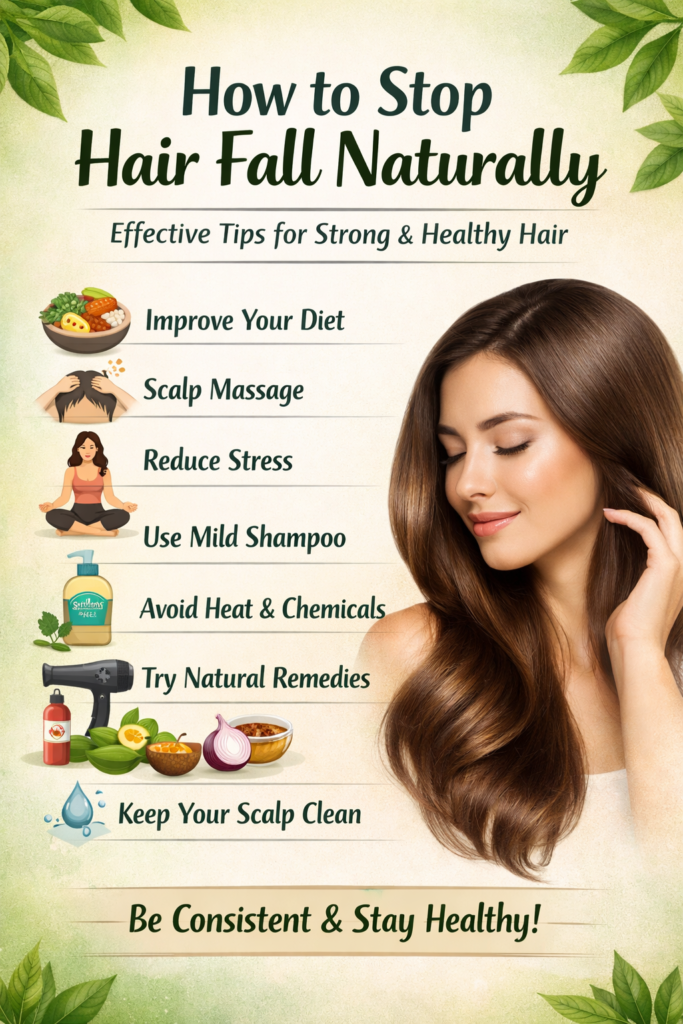
  • How to Stop Hair Fall Naturally Effective Tips for Strong & Healthy Hair


    Hair fall is a common problem faced by both men and women. Stress, poor diet, pollution, hormonal imbalance, and improper hair care routines can all contribute to excessive hair loss. The good news? With the right habits and natural care, hair fall can be controlled and even reversed.

    Below are proven ways to stop hair fall and promote healthy hair growth.


    Common Causes of Hair Fall

    Before treating hair fall, it’s important to understand what causes it:

    • Stress and anxiety
    • Poor nutrition (lack of protein, iron, vitamins)
    • Hormonal changes
    • Excessive heat styling and chemical treatments
    • Scalp infections and dandruff
    • Genetics

    1. Improve Your Diet

    Your hair needs proper nutrition to grow strong.

    Include in your diet:

    • Protein-rich foods (eggs, lentils, fish)
    • Iron and zinc (spinach, beans, nuts)
    • Vitamins A, C, D, and E
    • Omega-3 fatty acids (flax seeds, walnuts)

    Drink enough water daily to keep hair follicles hydrated.


    2. Massage Your Scalp Regularly

    Gentle scalp massages improve blood circulation and strengthen hair roots.

    • Massage for 5–10 minutes daily
    • Use coconut oil, castor oil, or onion oil
    • Helps reduce stress and boosts hair growth

    3. Use Mild Hair Care Products

    Harsh chemicals weaken hair roots.

    • Choose sulfate-free shampoos
    • Avoid daily washing
    • Apply conditioner mainly on hair lengths, not scalp

    4. Control Stress

    Stress is a major cause of hair fall.

    • Practice yoga or meditation
    • Get 7–8 hours of sleep
    • Exercise regularly to balance hormones

    5. Avoid Heat & Chemical Damage

    Excessive styling damages hair shafts.

    • Limit straighteners, curlers, and blow dryers
    • Avoid frequent coloring or chemical treatments
    • Always use a heat protectant when styling

    6. Try Natural Home Remedies

    Some effective natural remedies include:

    • Aloe vera: Soothes scalp and strengthens hair
    • Onion juice: Rich in sulfur, promotes regrowth
    • Fenugreek seeds: Reduces dandruff and hair loss
    • Egg mask: Strengthens hair with protein

    7. Keep Your Scalp Clean

    A dirty scalp blocks hair follicles.

    • Wash hair 2–3 times a week
    • Treat dandruff early
    • Avoid overuse of hair products

    When to See a Doctor

    If hair fall is severe or sudden, consult a dermatologist. Medical conditions like thyroid issues or nutrient deficiencies may require treatment.


    Final Thoughts

    Stopping hair fall requires patience and consistency. By following a balanced diet, gentle hair care routine, and natural treatments, you can reduce hair loss and improve hair strength over time. Healthy hair starts with healthy habits.


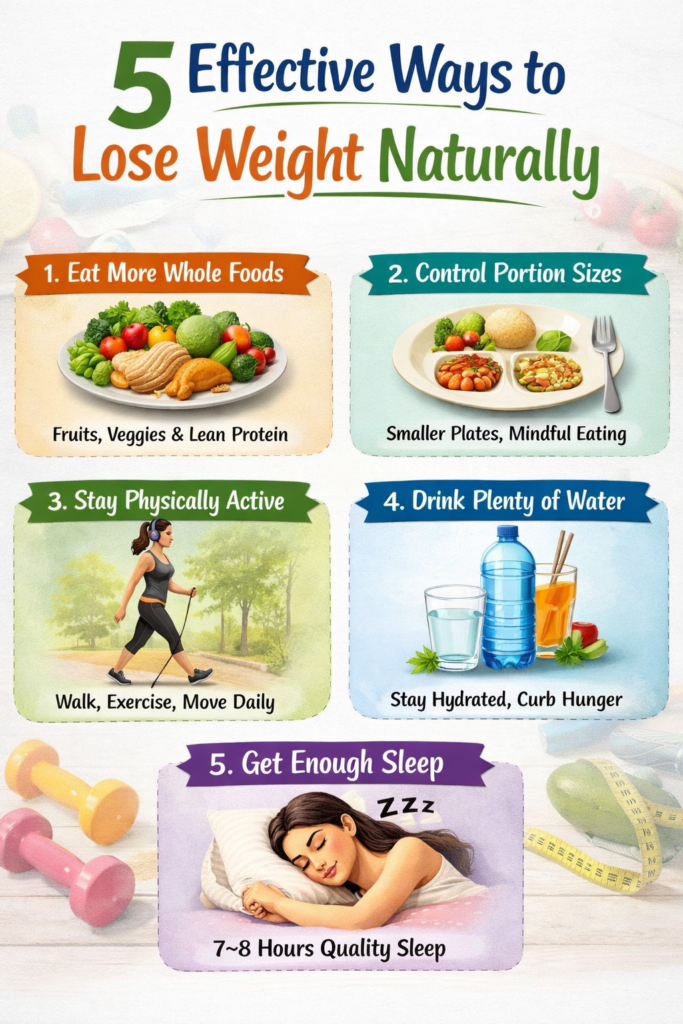
  • 5 Effective Ways to Lose Weight Naturally

    5 Effective Ways to Lose Weight Naturally

    Losing weight doesn’t require extreme dieting or expensive gym memberships. With the right habits and consistency, anyone can achieve a healthier body. Below are five proven and natural ways to lose weight and keep it off.

    1. Eat More Whole Foods

    Whole foods like fruits, vegetables, lean protein, whole grains, and nuts are rich in nutrients and low in empty calories. They keep you full for longer and reduce cravings. Avoid processed and fast foods as much as possible.

    2. Control Portion Sizes

    Eating healthy is important, but eating too much of anything can slow weight loss. Use smaller plates, eat slowly, and stop eating when you feel satisfied—not stuffed.

    3. Stay Physically Active

    You don’t need intense workouts to lose weight. Simple activities like walking, cycling, swimming, or home workouts done consistently can burn calories and improve metabolism. Aim for at least 30 minutes of movement daily.

    4. Drink Plenty of Water

    Drinking water helps control hunger and boosts digestion. Many people mistake thirst for hunger. Try drinking a glass of water before meals to reduce overeating.

    5. Get Enough Sleep

    Poor sleep can lead to weight gain by increasing hunger hormones and slowing metabolism. Aim for 7–8 hours of quality sleep each night to support your weight-loss journey.

    Final Thoughts

    Weight loss is a journey, not a race. Focus on building healthy habits, stay consistent, and be patient with your progress. Small daily changes can lead to big

  • The Smoothie Blueprint Your Simple Guide to Better Health & Weight Loss


    In today’s busy world, staying healthy often feels complicated. Diet plans are confusing, workouts are time-consuming, and meal prep feels overwhelming. That’s where The Smoothie Blueprint comes in—a simple, effective system designed to help you improve your health, lose weight, and boost energy using delicious, nutrient-packed smoothies.

    What Is The Smoothie Blueprint?

    The Smoothie Blueprint is a step-by-step wellness guide focused on using healthy smoothies as a powerful daily habit. Instead of extreme dieting, it teaches you how to nourish your body with balanced ingredients that support fat loss, digestion, and overall well-being.

    This blueprint is perfect for beginners because it removes guesswork and provides clear instructions anyone can follow.

    Why Smoothies Work So Well

    Smoothies are one of the easiest ways to pack essential nutrients into one meal. When made correctly, they can:

    • Boost metabolism
    • Reduce cravings
    • Improve digestion
    • Increase energy levels
    • Support natural weight loss

    Because smoothies are easy to digest, your body can quickly absorb vitamins, minerals, and antioxidants.

    What You’ll Learn Inside The Smoothie Blueprint

    The Smoothie Blueprint isn’t just a recipe collection. It’s a complete system that teaches you:

    1. The Right Ingredients for Fat Loss

    You’ll discover which fruits, vegetables, proteins, and healthy fats work together to burn fat while keeping you full for longer.

    2. Perfect Smoothie Combinations

    Learn how to balance carbs, protein, and fats to avoid sugar spikes and maintain steady energy throughout the day.

    3. Smoothies for Every Goal

    Whether you want to lose weight, detox your body, increase energy, or improve digestion, the blueprint provides targeted smoothie options.

    4. Time-Saving Meal Solutions

    All recipes are quick to prepare, making them ideal for busy lifestyles. No complex cooking required.

    Benefits of Following The Smoothie Blueprint

    By following this system consistently, many users experience:

    • Sustainable weight loss
    • Better digestion and gut health
    • Clearer skin
    • Reduced cravings
    • Increased daily energy

    Unlike restrictive diets, this approach focuses on nourishing your body instead of starving it.

    Who Is The Smoothie Blueprint For?

    The Smoothie Blueprint is ideal for:

    • Beginners starting a health or weight-loss journey
    • Busy professionals and parents
    • Anyone tired of complicated diets
    • People who enjoy simple, tasty meals
    • Those looking for a natural wellness solution

    No special equipment or advanced nutrition knowledge is required.

    Why This Blueprint Stands Out

    What makes The Smoothie Blueprint different is its simplicity and sustainability. Instead of short-term fixes, it helps you build healthy habits you can maintain long-term. The focus is on real ingredients, realistic routines, and enjoyable meals.

    Final Thoughts

    The Smoothie Blueprint offers a practical, delicious, and effective way to improve your health without stress. By incorporating powerful smoothies into your daily routine, you can support weight loss, boost energy, and feel better from the inside out.

    If you’re looking for a simple wellness strategy that actually fits into your lifestyle, The Smoothie Blueprint is a smart place to start.


  • The Lost SuperFoods: Ancient Nutrition Rediscovered for Modern Health


    The Lost SuperFoods: Ancient Nutrition Rediscovered for Modern Health

    In today’s fast-paced world, modern diets are dominated by processed foods, refined sugars, and artificial ingredients. Yet, long before supermarkets and supplements existed, ancient civilizations thrived on natural superfoods that supported strength, longevity, and disease resistance. Many of these powerful foods have been forgotten — until now.

    Welcome to The Lost SuperFoods: ancient nutritional treasures making a powerful comeback.


    🌿 What Are Lost SuperFoods?

    Lost SuperFoods are nutrient-dense natural foods that were widely consumed by ancient cultures but faded from modern diets due to industrial farming, colonization, or changing food systems.

    These foods are:

    • Rich in vitamins, minerals, and antioxidants
    • Naturally preserved or easy to store
    • Often grown in harsh conditions
    • Proven to sustain human health for centuries

    🏛️ Ancient Cultures Knew Better

    From the Aztecs to the Egyptians, early societies carefully selected foods that delivered maximum nourishment with minimal resources. They relied on plants, seeds, roots, and fats that provided long-lasting energy and protection against illness.

    Modern science is now confirming what ancient people already knew.


    🥗 Top Lost SuperFoods You Should Know

    1️⃣ Moringa

    Called the “Tree of Life”, moringa leaves contain:

    • More vitamin C than oranges
    • More calcium than milk
    • More iron than spinach

    Used in Africa and Asia for centuries, moringa boosts immunity, energy, and digestion.


    2️⃣ Amaranth

    A sacred grain of the Aztecs, amaranth is:

    • Gluten-free
    • High in protein and fiber
    • Packed with magnesium and iron

    It supports heart health and stable blood sugar levels.


    3️⃣ Chia Seeds

    Once used by Mayan warriors for endurance, chia seeds provide:

    • Omega-3 fatty acids
    • Long-lasting hydration
    • Appetite control

    Just one spoon can fuel hours of energy.


    4️⃣ Tallow (Animal Fat)

    Before vegetable oils, humans relied on natural animal fats like tallow.
    Benefits include:

    • Stable energy
    • Hormone support
    • Better nutrient absorption

    Unlike modern seed oils, tallow is heat-stable and inflammation-free.


    5️⃣ Seaweed

    Consumed for centuries in coastal regions, seaweed contains:

    • Iodine for thyroid health
    • Minerals from the ocean
    • Natural detoxifying properties

    It’s one of the most mineral-rich foods on Earth.


    6️⃣ Fermented Foods

    Ancient preservation methods produced powerful probiotics:

    • Sauerkraut
    • Kefir
    • Kimchi

    These foods improve gut health, immunity, and digestion naturally.


    🧠 Why Were These Foods Forgotten?

    The disappearance of these superfoods wasn’t accidental.

    Key reasons include:

    • Industrial agriculture prioritizing profit over nutrition
    • Colonization disrupting native diets
    • Rise of processed convenience foods
    • Replacement with low-cost, low-nutrient alternatives

    As a result, modern diets became calorie-rich but nutrient-poor.


    🔬 Science Is Bringing Them Back

    Modern research now confirms that many chronic diseases — fatigue, obesity, diabetes, inflammation — are directly linked to nutrient deficiencies.

    Lost SuperFoods address these problems naturally by:

    • Supporting gut health
    • Reducing inflammation
    • Improving brain and heart function
    • Increasing energy levels

    🌱 How to Add Lost SuperFoods to Your Diet

    You don’t need to change everything overnight. Start small:

    ✅ Add moringa powder to smoothies
    ✅ Sprinkle chia seeds into yogurt
    ✅ Replace refined oils with healthy fats
    ✅ Eat fermented foods weekly
    ✅ Try ancient grains like amaranth

    Consistency is more important than quantity.


    ⭐ Final Thoughts

    The Lost SuperFoods remind us that true nutrition isn’t new — it’s ancient. By reconnecting with the foods that sustained our ancestors, we can restore balance, vitality, and long-term health.

    In a world full of artificial solutions, the most powerful answers are often the ones we forgot.

    Sometimes the future of health begins in the past.


  • 30-Day Meal Plan for Weight Loss (Healthy, Simple & Sustainable)


    30-Day Meal Plan for Weight Loss (Healthy, Simple & Sustainable)

    Losing weight doesn’t require starvation or extreme diets. The key to sustainable weight loss is balanced meals, portion control, and consistency. This 30-day meal plan for weight loss is designed to help you burn fat, boost energy, and build healthier eating habits—without feeling deprived.


    How This 30-Day Weight Loss Meal Plan Works

    This plan focuses on:

    • High-protein meals to keep you full
    • Fiber-rich foods to support digestion
    • Healthy fats for hormone balance
    • Low-sugar, whole foods
    • Simple ingredients available anywhere

    ✔ No expensive supplements
    ✔ No extreme calorie cutting
    ✔ Easy to follow for beginners


    Daily Meal Structure

    Each day includes:

    • Breakfast
    • Lunch
    • Dinner
    • 2 Healthy Snacks
    • 8–10 glasses of water daily

    Optional: 20–30 minutes of light exercise (walking, stretching, yoga).


    Week 1: Clean Start & Detox (Days 1–7)

    Breakfast Options

    • Oatmeal with berries & chia seeds
    • Boiled eggs with whole-grain toast
    • Greek yogurt with honey & nuts

    Lunch

    • Grilled chicken salad with olive oil dressing
    • Vegetable soup with lentils
    • Tuna salad with mixed greens

    Dinner

    • Baked fish with steamed vegetables
    • Stir-fried veggies with tofu
    • Grilled chicken & quinoa

    Snacks

    • Apple or banana
    • Handful of almonds

    Week 2: Fat-Burn Mode (Days 8–14)

    Breakfast

    • Smoothie (banana, spinach, protein powder)
    • Scrambled eggs with vegetables

    Lunch

    • Brown rice with vegetables & grilled fish
    • Chicken wrap (whole-wheat)

    Dinner

    • Lean beef or turkey with sautéed vegetables
    • Baked sweet potato with Greek yogurt

    Snacks

    • Boiled eggs
    • Greek yogurt

    Week 3: Energy & Metabolism Boost (Days 15–21)

    Breakfast

    • Avocado toast with eggs
    • Oatmeal with peanut butter

    Lunch

    • Chickpea salad with lemon dressing
    • Grilled chicken with veggies

    Dinner

    • Salmon with asparagus
    • Vegetable stir-fry with brown rice

    Snacks

    • Fruit smoothie
    • Nuts or seeds

    Week 4: Maintain & Tone (Days 22–30)

    Breakfast

    • Yogurt bowl with fruits & seeds
    • Omelet with vegetables

    Lunch

    • Grilled chicken quinoa bowl
    • Tuna & avocado salad

    Dinner

    • Light soup or grilled fish
    • Veggie wrap

    Snacks

    • Cottage cheese
    • Dark chocolate (small piece)

    Foods to Avoid During the 30 Days

    🚫 Sugary drinks
    🚫 Fried foods
    🚫 Fast food
    🚫 White bread & refined carbs
    🚫 Processed snacks


    Expected Weight Loss Results

    Most people can lose 4–8 kg (9–17 lbs) in 30 days, depending on:

    • Starting weight
    • Activity level
    • Consistency

    Results vary, but this plan focuses on long-term fat loss, not quick fixes.


    Tips to Maximize Results

    ✅ Eat slowly & mindfully
    ✅ Sleep 7–8 hours nightly
    ✅ Stay hydrated
    ✅ Move daily
    ✅ Stay consistent, not perfect


    Final Thoughts

    This 30-day meal plan for weight loss is realistic, balanced, and beginner-friendly. It helps you lose weight naturally while building habits you can maintain for life.

    Remember: Weight loss is a journey, not a race. Stay patient, stay consistent, and your results will come.


  • Home Doctor Simple Health Care Solutions at Home


    Home Doctor: Simple Health Care Solutions at Home

    In today’s fast-paced world, not every health issue requires an immediate hospital visit. Many minor illnesses and everyday health problems can be managed safely at home with the right knowledge and care. This is where the concept of a Home Doctor becomes valuable.

    A Home Doctor approach focuses on basic healthcare, prevention, and natural remedies, helping people take better control of their health from the comfort of their homes.


    What Is a Home Doctor?

    A Home Doctor refers to:

    • Managing minor health conditions at home
    • Using safe home remedies and lifestyle adjustments
    • Knowing when to treat at home and when to see a professional

    It does not replace real doctors, but supports healthy living, early care, and prevention.


    Benefits of Home Doctor Care

    ✔️ Saves time and money
    ✔️ Reduces unnecessary clinic visits
    ✔️ Promotes self-care and awareness
    ✔️ Ideal for minor and common illnesses
    ✔️ Improves daily health habits


    Common Health Problems Treated at Home

    1️⃣ Cold, Flu, and Fever

    Home care tips:

    • Rest and hydration
    • Warm fluids like herbal tea
    • Steam inhalation
    • Light meals

    If fever lasts more than 2–3 days, medical help is necessary.


    2️⃣ Headache & Migraine

    Home remedies:

    • Proper sleep
    • Cold or warm compress
    • Reduce screen time
    • Stay hydrated

    Chronic headaches should not be ignored.


    3️⃣ Digestive Issues

    Problems like bloating, gas, and mild stomach pain can often be treated with:

    • Ginger or peppermint tea
    • Eating smaller meals
    • Avoiding spicy or oily food
    • Walking after meals

    4️⃣ Minor Pain & Muscle Strain

    For mild body pain:

    • Warm compress or ice pack
    • Light stretching
    • Rest and proper posture

    Severe pain or injury needs professional care.


    5️⃣ Skin & Hair Care

    A Home Doctor approach includes:

    • Gentle cleansing
    • Natural oils for dry skin
    • Aloe vera for irritation
    • Proper hydration for healthy hair

    Preventive Care: The Core of Home Doctor

    Prevention is better than cure. Simple habits include:

    • Drinking enough water
    • Eating balanced meals
    • Regular exercise
    • Quality sleep
    • Stress management

    These habits reduce the risk of many diseases.


    When You Should NOT Rely on Home Care

    Home Doctor care is not suitable for:
    ❌ Severe chest pain
    ❌ Difficulty breathing
    ❌ Heavy bleeding
    ❌ Severe injuries
    ❌ Long-lasting or worsening symptoms

    In these cases, always seek immediate medical help.


    Home Doctor in the Digital Age

    Today, the Home Doctor concept also includes:

    • Online doctor consultations
    • Health apps
    • Remote monitoring
    • Medical advice platforms

    Technology makes healthcare more accessible than ever.


    Final Thoughts

    The Home Doctor concept empowers people to take charge of their everyday health, manage minor conditions, and build long-term healthy habits. While it is extremely useful for daily wellness and prevention, it should always work alongside professional medical care, not replace it.

    A healthy home leads to a healthy life 🏡💙


  • Nutrition Eat for Energy and Longevity

    1️⃣ Nutrition: Eat for Energy and Longevity

    • Balance your plate: Include protein, healthy fats, and complex carbs.
    • Eat more fruits and vegetables (5+ servings/day).
    • Limit sugar, processed foods, and excessive salt.
    • Stay hydrated: Aim for 2–3 liters of water daily.
    • Moderation over restriction: It’s better to have small indulgences than extreme dieting.

    💡 Tip: Eat slowly and listen to your body — stop when satisfied, not stuffed.


    2️⃣ Exercise: Keep Your Body Moving

    • Cardio: Walking, jogging, cycling — 150 min/week.
    • Strength training: 2–3 times/week to build muscle and protect bones.
    • Flexibility & mobility: Stretching or yoga for posture and joint health.
    • Daily movement: Take stairs, short walks, or standing breaks if you sit long.

    💡 Tip: Find an activity you enjoy — it sticks better.


    3️⃣ Sleep: Recharge Your Body

    • 7–9 hours per night is optimal.
    • Maintain a consistent sleep schedule.
    • Limit screens 1 hour before bed to improve sleep quality.
    • Sleep in a dark, cool, quiet room for deep rest.

    💡 Tip: Short naps (20–30 min) are okay, but avoid long daytime sleep.


    4️⃣ Mental Health: Stress Less, Smile More

    • Practice mindfulness or meditation daily (even 5–10 min).
    • Connect with loved ones — social support matters.
    • Hobbies & fun reduce stress and improve mood.
    • Limit negative news/social media that triggers anxiety.

    💡 Tip: Journaling or gratitude lists help track emotions and reduce stress.


    5️⃣ Preventive Care: Stay Ahead

    • Regular checkups: Physical, dental, vision.
    • Vaccinations: Keep them up to date.
    • Screenings: Blood pressure, cholesterol, blood sugar — especially if family history.
    • Self-care checks: Skin, weight, posture, and daily energy levels.

    6️⃣ Avoid Harmful Habits

    • Don’t smoke — even occasional smoking harms your body.
    • Limit alcohol — stick to recommended guidelines.
    • Avoid excessive junk food or energy drinks.
    • Be mindful of medications — only take what’s prescribed.

    7️⃣ Build Healthy Routines

    • Morning ritual: Water, light stretch, balanced breakfast.
    • Daily movement: Walk, stairs, light exercise.
    • Evening wind-down: Reflect, relax, sleep routine.

    💡 Tip: Consistency beats intensity. Small healthy habits every day are more powerful than occasional extreme measures.