Author: ahmad

  • Quick Recipes 30 Day Weight Loss Plan

    Quick Recipes: 30 Day Weight Loss Plan

    Losing weight doesn’t have to mean starving yourself or eating boring food. With the right plan and quick, healthy recipes, you can lose weight naturally while still enjoying your meals.
    This 30 Day Weight Loss Plan focuses on simple, affordable, and fast recipes that help burn fat, control calories, and keep you full longer.


    Why a 30 Day Plan Works

    A 30-day plan helps you:

    • Build healthy eating habits
    • Control portions
    • Reduce processed foods
    • Stay consistent
    • See visible results

    Consistency is more important than perfection. Small daily changes lead to big results.


    Week 1: Clean & Simple Eating

    Focus: Remove junk food, sugar, and fried items.

    🥣 Breakfast

    • Oatmeal with chia seeds and berries
    • Boiled eggs + 1 slice whole wheat toast
    • Greek yogurt with nuts

    🥗 Lunch

    • Grilled chicken salad
    • Lentil soup with vegetables
    • Brown rice + steamed vegetables

    🍲 Dinner

    • Stir-fried vegetables
    • Baked fish with salad
    • Vegetable omelet

    Snack ideas: Apple slices, almonds, cucumber, green tea.


    Week 2: Increase Protein & Fiber

    Focus: Stay full longer and reduce cravings.

    Quick Recipe Example:

    High-Protein Egg Wrap

    • 2 eggs
    • Spinach
    • Tomato
    • Wrap in whole wheat tortilla
      Cook for 5 minutes and enjoy.

    Other meal ideas:

    • Chickpea salad
    • Grilled tofu bowl
    • Tuna salad

    Week 3: Fat Burning Focus

    Focus: Lower carbs at dinner and increase vegetables.

    Quick Recipe Example:

    Fat Burning Soup

    • Cabbage
    • Carrots
    • Tomato
    • Onion
    • Garlic
      Boil and simmer for 20 minutes. Eat for dinner.

    Other dinners:

    • Grilled chicken + broccoli
    • Zucchini noodles
    • Baked salmon + greens

    Week 4: Balanced & Sustainable Eating

    Focus: Maintain results and avoid overeating.

    Simple Daily Structure:

    • Protein at every meal
    • Vegetables on half your plate
    • Healthy fats (nuts, olive oil)
    • Drink 2–3 liters of water daily

    Sample Full Day Meal Plan

    Breakfast: Oats + chia + banana
    Lunch: Grilled chicken salad
    Snack: Handful of almonds
    Dinner: Vegetable soup + boiled eggs

    Calories: 1,200–1,500 (adjust depending on your body and activity level)


    Extra Tips for Faster Results

    ✔ Walk 30 minutes daily
    ✔ Avoid sugary drinks
    ✔ Sleep 7–8 hours
    ✔ Reduce salt intake
    ✔ Track your meals


    What Results Can You Expect?

    In 30 days, you may lose:

    • 2–5 kg (healthy range)
    • Less bloating
    • More energy
    • Better digestion

    Weight loss depends on your consistency, metabolism, and activity level.


    Final Thoughts

    This Quick Recipes 30 Day Weight Loss Plan is designed for busy people who want simple meals without spending hours cooking. Healthy food doesn’t have to be complicated. Keep it simple, stay consistent, and your results will follow.

    tell me 😊
  • Easy Recipes 30-Day Weight Loss Plan (Simple, Affordable & Effective0

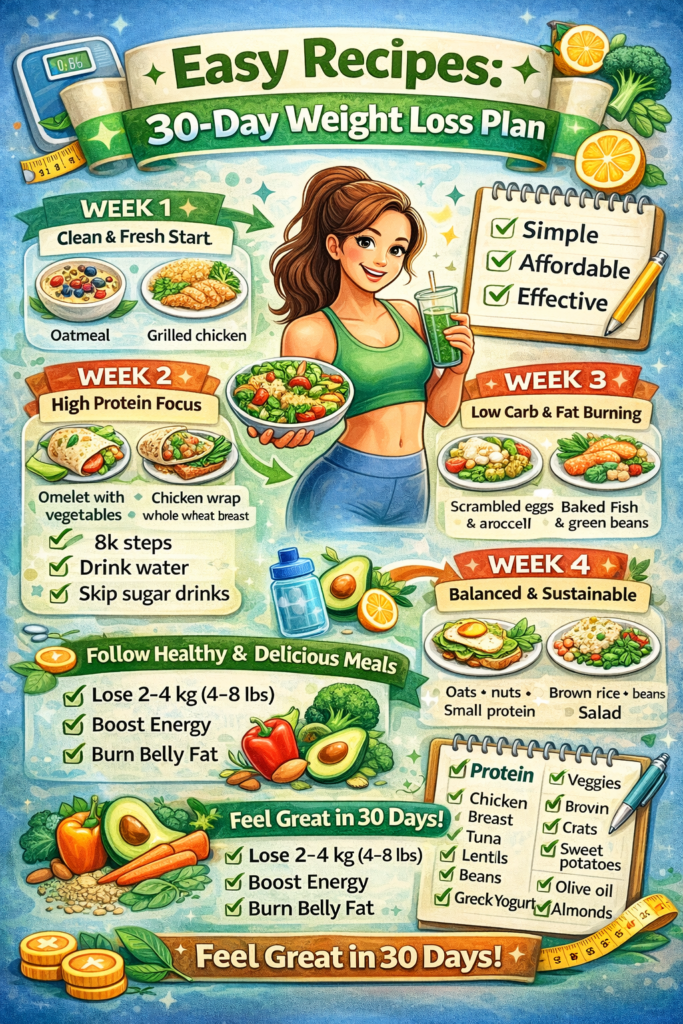
    Easy Recipes: 30-Day Weight Loss Plan (Simple, Affordable & Effective)

    Losing weight doesn’t have to mean starving yourself or eating boring food. With the right plan, simple recipes, and portion control, you can burn fat, improve energy, and feel healthier in just 30 days.

    This guide gives you an easy, realistic 30-day weight loss meal structure using affordable, everyday ingredients.


    🥗 How This 30-Day Plan Works

    ✔ Focus on whole foods
    ✔ High protein to stay full longer
    ✔ More vegetables and fiber
    ✔ Controlled portions
    ✔ Low added sugar
    ✔ 2–3 liters of water daily

    Average healthy weight loss: 2–4 kg (4–8 lbs) in 30 days (varies by person).


    🗓 Weekly Structure Overview

    Instead of 30 different complicated meals, rotate simple recipes each week.


    🥣 WEEK 1 – Clean & Fresh Start

    Breakfast Options

    • Oatmeal + chia seeds + berries
    • 2 boiled eggs + 1 slice whole wheat toast
    • Greek yogurt + banana + nuts

    Lunch Options

    • Grilled chicken + brown rice + steamed vegetables
    • Tuna salad + olive oil + lemon
    • Lentil soup + side salad

    Dinner Options

    • Vegetable stir-fry + tofu or chicken
    • Baked fish + broccoli
    • Scrambled eggs + spinach

    Snack ideas:

    • Apple
    • Handful of almonds
    • Cucumber & carrot sticks

    🥑 WEEK 2 – High Protein Focus

    Breakfast

    • Omelet with vegetables
    • Protein smoothie (banana + peanut butter + milk)
    • Cottage cheese + fruit

    Lunch

    • Chicken wrap (whole wheat)
    • Quinoa + grilled vegetables
    • Chickpea salad

    Dinner

    • Grilled salmon + salad
    • Turkey mince + mixed veggies
    • Zucchini noodles + tomato sauce

    🍳 WEEK 3 – Low Carb & Fat Burning

    Breakfast

    • Scrambled eggs + avocado
    • Smoothie bowl (no added sugar)
    • Boiled eggs + cucumber

    Lunch

    • Grilled chicken salad
    • Beef stir-fry (no rice)
    • Cauliflower rice + veggies

    Dinner

    • Soup + salad combo
    • Baked fish + green beans
    • Eggplant & tomato bake

    🥙 WEEK 4 – Balanced & Sustainable

    Breakfast

    • Oats + nuts + honey (small portion)
    • Toast + avocado + egg
    • Yogurt + berries

    Lunch

    • Brown rice + beans + salad
    • Chicken & vegetable soup
    • Grilled fish wrap

    Dinner

    • Vegetable curry (light coconut milk)
    • Baked chicken + sweet potato
    • Stir-fried vegetables + tofu

    🍵 Daily Fat-Burning Tips

    ✔ Walk 8,000–10,000 steps daily
    ✔ Avoid sugary drinks
    ✔ Sleep 7–8 hours
    ✔ Eat slowly
    ✔ Stop eating 2–3 hours before bed


    🛒 Simple Grocery List

    Protein:

    • Eggs
    • Chicken breast
    • Tuna
    • Lentils
    • Beans
    • Greek yogurt

    Vegetables:

    • Spinach
    • Broccoli
    • Carrots
    • Cucumbers
    • Tomatoes
    • Zucchini

    Carbs:

    • Brown rice
    • Oats
    • Whole wheat bread
    • Sweet potatoes

    Healthy Fats:

    • Olive oil
    • Avocado
    • Nuts
    • Seeds

    ⚠️ Common Mistakes to Avoid

    ❌ Skipping meals
    ❌ Eating too little protein
    ❌ Drinking calories (soda, sugary juices)
    ❌ No exercise
    ❌ Quitting after one bad day


    📊 Expected Results in 30 Days

    If followed consistently:

    • Reduced belly fat
    • Better digestion
    • More energy
    • Less sugar cravings
    • 2–4 kg weight loss (average)

    Remember: consistency beats perfection.


    💚 Final Thoughts

    A 30-day weight loss plan does not need extreme diets. Simple recipes, portion control, movement, and discipline bring real results.

    Just tell me 😊

  • How to Achieve Beautiful, Healthy Hair Tips and Care Guide

    How to Achieve Beautiful, Healthy Hair: Tips and Care Guide

    Beautiful hair isn’t just about genetics—it’s about consistent care, nutrition, and healthy habits. Whether your goal is silky straight hair, bouncy curls, or strong and voluminous locks, the fundamentals of hair health remain the same.


    1. Understand Your Hair Type

    Before you start any hair routine, know your hair type:

    • Straight Hair: Naturally smooth, less prone to tangles, but can appear flat.
    • Wavy Hair: Has gentle waves; prone to frizz if not moisturized.
    • Curly Hair: Tends to be dry; requires deep hydration and protective styling.
    • Coily/Kinky Hair: Highly textured; benefits from heavy moisturizing and gentle handling.

    Knowing your hair type helps you choose the right products and styling techniques.


    2. Maintain a Healthy Hair Care Routine

    A good hair routine includes cleansing, conditioning, and protecting:

    Cleansing:

    • Use a gentle shampoo 2–3 times per week to avoid stripping natural oils
    • Choose sulfate-free shampoos for sensitive or colored hair

    Conditioning:

    • Apply conditioner after every wash
    • Focus on mid-lengths to ends to avoid a greasy scalp
    • Deep condition once a week for extra hydration

    Protecting:

    • Limit heat styling (straighteners, curling irons, blow dryers)
    • Always use a heat protectant spray
    • Avoid tight hairstyles that pull on the scalp

    3. Nourish from the Inside Out

    Healthy hair starts with a balanced diet:

    • Proteins: Hair is mostly keratin, a protein, so eat eggs, fish, and legumes
    • Vitamins: Vitamins A, C, D, and E support hair growth
    • Minerals: Iron, zinc, and biotin strengthen strands
    • Healthy Fats: Avocado, nuts, and olive oil keep hair shiny and soft
    • Hydration: Drink at least 8 glasses of water per day

    💡 Tip: Supplements can help, but real food is always the best source of nutrients.


    4. Regular Trims

    • Trim your hair every 6–8 weeks to remove split ends
    • This prevents breakage and promotes healthier growth
    • Even if growing your hair long, regular trims are essential

    5. Scalp Care

    Your scalp is the foundation for beautiful hair:

    • Massage your scalp for 3–5 minutes daily to stimulate blood flow
    • Use gentle exfoliating scalp scrubs weekly to remove buildup
    • Keep your scalp clean but not overly dry

    6. Protect Hair from Environmental Damage

    • Sun, pollution, and chlorine can damage hair
    • Wear hats or scarves in strong sunlight
    • Rinse hair after swimming in pools or the ocean
    • Use leave-in conditioners or serums for extra protection

    7. Avoid Over-Manipulation

    • Limit brushing wet hair (use a wide-tooth comb)
    • Avoid excessive hair coloring or chemical treatments
    • Sleep on a silk or satin pillowcase to reduce friction

    8. Use Natural Treatments

    Natural oils and masks can improve hair strength and shine:

    • Coconut Oil: Moisturizes and reduces protein loss
    • Argan Oil: Adds shine and smooths frizz
    • Aloe Vera: Soothes scalp and strengthens strands
    • Honey and Yogurt Mask: Hydrates and nourishes dry hair

    9. Be Patient

    Hair growth and transformation take time:

    • Average hair grows about 1–1.5 cm per month
    • Consistency with care routines produces visible results within 2–3 months

    Final Thoughts

    Beautiful hair is a combination of proper care, nutrition, and protection. It’s not about using the most expensive products but about understanding your hair’s needs and treating it gently.

    By following a structured routine, eating right, and protecting your strands, you can enjoy strong, shiny, and healthy hair every day.


  • 30 Day Meal Plan for Fat Burning Burn Fat Safely & Effectively

    30 Day Meal Plan for Fat Burning Burn Fat Safely & Effectively

    Losing fat requires a combination of healthy eating, portion control, and consistent activity. A structured 30-day fat-burning meal plan helps you stay on track while providing your body with the nutrients it needs to function optimally. Unlike crash diets, this plan is sustainable, supports muscle retention, and promotes long-term results.


    Why a 30-Day Fat-Burning Meal Plan Works

    Fat loss happens when your body is in a calorie deficit — burning more energy than you consume. But the quality of your calories matters. A fat-burning plan should:

    • Include lean proteins to maintain muscle
    • Incorporate healthy fats for hormone balance
    • Provide complex carbs for energy
    • Focus on fiber-rich vegetables and fruits for fullness
    • Avoid highly processed foods and added sugars

    Weekly Structure Overview

    The plan is divided into 4 weeks, gradually building healthy habits:

    Week 1: Reset & Cleanse

    • Focus on whole, unprocessed foods
    • Drink plenty of water (2–3L daily)
    • Avoid sugary beverages and snacks

    Sample Day:

    • Breakfast: Spinach & mushroom omelet
    • Lunch: Grilled chicken salad with avocado
    • Dinner: Baked salmon with steamed broccoli
    • Snack: Handful of almonds

    Week 2: Portion Control & Balance

    • Adjust portion sizes using the half-plate rule: ½ vegetables, ¼ protein, ¼ carbs
    • Introduce complex carbs for energy and fiber

    Sample Day:

    • Breakfast: Oats with chia seeds and berries
    • Lunch: Quinoa bowl with grilled turkey and vegetables
    • Dinner: Stir-fried tofu with mixed greens
    • Snack: Greek yogurt with a few walnuts

    Week 3: Protein & Fiber Boost

    • Add extra protein to reduce cravings and support muscle retention
    • Increase fiber from vegetables, fruits, and legumes to promote fullness

    Sample Day:

    • Breakfast: Veggie omelet + avocado
    • Lunch: Lentil soup with a side salad
    • Dinner: Grilled chicken breast with roasted sweet potatoes
    • Snack: Apple slices with peanut butter

    Week 4: Consistency & Habit Building

    • Focus on meal prepping to reduce unhealthy food choices
    • Keep a flexible meal once per week to stay motivated
    • Practice mindful eating

    Sample Day:


    Fat-Burning Grocery List

    Proteins: Chicken breast, turkey, salmon, eggs, tofu, Greek yogurt
    Vegetables: Spinach, broccoli, bell peppers, zucchini, kale
    Carbs: Oats, quinoa, brown rice, sweet potatoes
    Fats: Olive oil, avocado, nuts, seeds
    Fruits: Berries, apples, oranges, kiwi


    Portion & Calorie Guidelines

    • Target a calorie deficit of 300–500 calories/day
    • Typical daily intake: 1,500–2,000 calories (adjust by weight, age, activity level)
    • Combine with moderate exercise: 30 min walking daily + 2–3 strength workouts weekly

    Tips for Successful Fat Burning

    • Track your meals and calories initially to stay accountable
    • Drink at least 2 liters of water daily
    • Avoid skipping meals to prevent overeating later
    • Focus on fat loss, not just weight loss
    • Sleep 7–8 hours per night to optimize metabolism

    Expected Results in 30 Days

    By following this fat-burning meal plan consistently, you can expect:

    • 2–5 kg of fat loss (depending on starting point)
    • Improved energy levels
    • Reduced bloating
    • Stronger adherence to healthy eating habits

    Conclusion

    A 30-day fat-burning meal plan isn’t about deprivation. It’s about making sustainable choices that help you burn fat, retain muscle, and build long-term healthy habits.

    Consistency, portion control, and nutrient-rich meals are the keys to success.


  • Sustainable 30 Day Meal Plan For Weight Loss

    Sustainable 30 Day Meal Plan For Weight Loss

    Losing weight is not about starving yourself or following extreme diets. A sustainable 30-day meal plan focuses on balanced nutrition, portion control, and realistic habits you can maintain long-term.

    The goal is simple:
    ✔ Burn fat
    ✔ Maintain muscle
    ✔ Improve energy
    ✔ Build healthy eating habits

    Let’s break it down step by step.


    What Makes a Meal Plan “Sustainable”?

    A sustainable weight loss plan:

    • Includes all food groups
    • Avoids extreme calorie restriction
    • Allows flexibility (80/20 rule)
    • Is affordable and easy to prepare
    • Fits your lifestyle

    Crash diets may give fast results, but they often cause weight regain. Sustainable plans help you lose 0.5–1 kg per week safely.


    30-Day Structure Overview

    Instead of strict daily rules, this plan works in weekly phases.


    Week 1: Clean Up & Reset

    Focus on:

    • Removing sugary drinks
    • Increasing water intake (2–3L daily)
    • Eating whole foods
    • Reducing processed snacks

    Sample Day:

    Breakfast: Oatmeal with berries & seeds
    Lunch: Grilled chicken salad
    Dinner: Baked fish with vegetables
    Snack: Apple + handful of nuts

    Goal: Reduce bloating and improve digestion.


    Week 2: Balanced Portions

    Now adjust portion sizes.

    Follow this plate method:

    • ½ vegetables
    • ¼ protein
    • ¼ healthy carbs

    Healthy carb sources:

    • Brown rice
    • Sweet potatoes
    • Whole-grain bread
    • Quinoa

    Protein sources:

    • Eggs
    • Chicken breast
    • Tuna
    • Greek yogurt
    • Beans

    Goal: Improve portion awareness.


    Week 3: Increase Protein & Fiber

    Protein helps reduce cravings and protect muscle.

    Add:

    • 1 high-protein breakfast daily
    • More leafy greens
    • Legumes twice per week

    Example meals:

    • Veggie omelet + avocado
    • Turkey wrap with salad
    • Stir-fried vegetables with lean beef

    Goal: Control hunger and stabilize blood sugar.


    Week 4: Consistency & Habit Building

    This is where sustainability happens.

    Focus on:

    • Meal prepping 2–3 days ahead
    • Planning groceries
    • Eating mindfully
    • Keeping one flexible meal per week

    This prevents burnout and binge eating.


    Grocery List for 30 Days

    Proteins

    • Eggs
    • Chicken breast
    • Tuna
    • Lean beef
    • Lentils
    • Greek yogurt

    Vegetables

    • Spinach
    • Broccoli
    • Carrots
    • Tomatoes
    • Peppers
    • Cucumbers

    Healthy Carbs

    • Oats
    • Brown rice
    • Sweet potatoes
    • Whole-grain pasta

    Healthy Fats

    • Olive oil
    • Avocado
    • Nuts
    • Seeds

    Portion & Calorie Guidelines

    General sustainable deficit:

    • Reduce 300–500 calories per day
    • Average intake: 1,500–2,000 calories (depends on age, gender, activity level)

    Combine with:

    • 30 minutes walking daily
    • 3 strength workouts weekly
    • 7–8 hours sleep

    Expected Results in 30 Days

    With consistency, many people can lose:

    • 2–4 kg (4–9 lbs)
    • Notice reduced bloating
    • Improve energy levels
    • Develop better food control

    Remember: Sustainable weight loss is slow but long-lasting.


    Tips for Long-Term Success

    ✔ Don’t skip meals
    ✔ Stay hydrated
    ✔ Avoid liquid calories
    ✔ Track progress weekly (not daily)
    ✔ Focus on fat loss, not just scale weight


    Final Thoughts

    A sustainable 30-day meal plan is not a temporary diet — it’s a foundation for a healthier lifestyle.

    Start simple. Stay consistent. Adjust when needed.

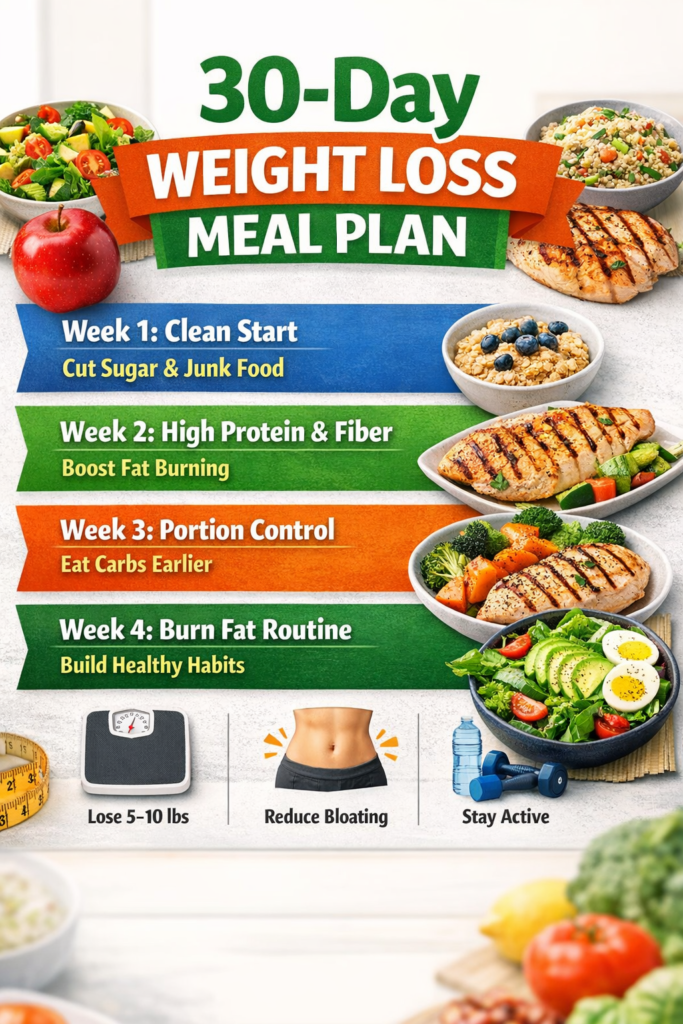
  • Realistic 30 Day Meal Plan For Weight Loss

    Realistic 30 Day Meal Plan For Weight Loss

    Losing weight doesn’t require extreme dieting or starving yourself. A realistic 30-day meal plan focuses on balanced nutrition, portion control, and consistency. The goal is to create a small calorie deficit while keeping your body energized and satisfied.

    This guide outlines a practical approach you can follow without expensive supplements or complicated recipes.


    ✅ Basic Rules Before You Start

    1. Eat 3 main meals + 1–2 healthy snacks
    2. Drink 2–3 liters of water daily
    3. Reduce sugar and refined carbs
    4. Prioritize protein and fiber
    5. Control portion sizes (don’t overeat healthy food)
    6. Combine with light exercise (walking 30 minutes daily)

    🥗 Week 1: Clean Start (Reduce Sugar & Processed Food)

    Focus: Cut junk food and stabilize appetite.

    Breakfast Options

    • Oatmeal with banana and nuts
    • 2 boiled eggs + 1 slice whole grain toast
    • Greek yogurt + berries

    Lunch Options

    • Grilled chicken + brown rice + vegetables
    • Lentil soup + side salad
    • Tuna salad with olive oil dressing

    Dinner Options

    • Vegetable stir-fry + tofu/chicken
    • Grilled fish + steamed vegetables
    • Light chicken soup

    Snack Ideas

    • Apple + peanut butter
    • Handful of almonds
    • Boiled egg

    🥑 Week 2: Increase Protein & Fiber

    Focus: Boost fat burning and reduce cravings.

    Breakfast

    • Vegetable omelet
    • Smoothie (spinach, banana, protein yogurt)
    • Oats with chia seeds

    Lunch

    • Quinoa + grilled chicken + salad
    • Chickpea curry + small portion rice
    • Turkey sandwich (whole grain bread)

    Dinner

    • Baked salmon + broccoli
    • Stir-fried vegetables + lean beef
    • Cottage cheese + cucumber salad

    Snack smart and limit sweets to once per week.


    🍳 Week 3: Portion Control & Carb Timing

    Focus: Eat carbs earlier in the day.

    Breakfast

    • Eggs + avocado
    • Oatmeal + berries

    Lunch

    • Chicken + sweet potato + greens
    • Brown rice bowl + vegetables

    Dinner (Low-Carb)

    • Grilled fish + salad
    • Chicken + steamed vegetables
    • Tofu + sautéed spinach

    Avoid heavy dinners. Keep it light.


    🥬 Week 4: Fat Burning Routine

    Focus: Consistency and habit building.

    Repeat your favorite meals from earlier weeks but:

    • Reduce rice/bread portions slightly
    • Increase vegetables
    • Avoid sugary drinks completely

    Add:

    • 2 higher-protein days per week
    • 1 controlled “treat meal” (not cheat day)

    🧠 Sample Full Day Example

    Breakfast: Oatmeal + 2 eggs
    Snack: Apple + nuts
    Lunch: Grilled chicken + brown rice + salad
    Snack: Yogurt
    Dinner: Baked fish + vegetables


    💧 Hydration Tip

    Drink water before meals to help control appetite.


    🏃 Expected Results

    With consistency and light exercise:

    • 2–5 kg (4–10 lbs) weight loss in 30 days (varies by person)
    • Reduced bloating
    • Better energy
    • Improved eating habits

    🎯 Final Advice

    Weight loss is not about perfection. It’s about small daily improvements. Focus on building habits you can maintain beyond 30 days.

  • 30 Day Diet Plan To Lose Weight

    30-Day Diet Plan to Lose Weight

    Losing weight doesn’t have to be complicated. A structured diet plan, combined with healthy habits and portion control, can help you shed pounds steadily and safely. This 30-day diet plan focuses on balanced nutrition, sustainable weight loss, and building habits that last beyond the month.


    Why Follow a 30-Day Diet Plan?

    A 30-day plan provides:

    • Clear structure to avoid decision fatigue
    • Balanced meals that reduce cravings
    • Sustainable weight loss without extreme dieting
    • A foundation for long-term healthy eating

    Week 1: Clean Eating & Reset

    Goal: Eliminate processed foods and reset your metabolism.

    Guidelines:

    • Avoid sugary drinks, junk food, and fried foods
    • Drink at least 2–3 liters of water daily
    • Eat whole, unprocessed foods
    • Include vegetables in every meal

    Sample Day:

    • Breakfast: Oatmeal with berries and a handful of nuts
    • Lunch: Grilled chicken with steamed vegetables
    • Snack: Greek yogurt or an apple
    • Dinner: Baked fish with quinoa and salad

    Focus on portion control and mindful eating. This week helps reduce bloating and cravings.


    Week 2: Balanced Nutrition

    Goal: Incorporate the right balance of macronutrients.

    Guidelines:

    • 40% vegetables
    • 30% protein
    • 20% whole grains
    • 10% healthy fats

    Protein Options:

    • Eggs, chicken, fish, lentils, tofu

    Protein helps control hunger and preserves muscle mass while losing fat. Include high-fiber vegetables and moderate healthy fats to stay satisfied.


    Week 3: Portion Control & Smart Choices

    Goal: Learn to control calories without restriction.

    • Eat every 3–4 hours to maintain metabolism
    • Reduce refined carbs (white bread, pastries)
    • Focus on whole foods
    • Avoid late-night snacks

    Consider using a food diary or calorie tracking app to stay aware of your intake without obsessing.


    Week 4: Sustainable Habits

    Goal: Make healthy eating a lifestyle, not a temporary diet.

    • Meal prep for the week
    • Plan grocery lists
    • Limit cheat meals to once a week
    • Practice mindful eating and slow consumption

    By now, you may notice:

    • Reduced belly fat
    • Increased energy
    • Better digestion
    • Improved sleep

    Foods That Promote Weight Loss

    ✅ Leafy greens
    ✅ Lean proteins (chicken, fish, tofu)
    ✅ Whole grains (quinoa, brown rice, oats)
    ✅ Fruits (in moderation)
    ✅ Healthy fats (avocado, olive oil, nuts)


    Foods to Limit

    ❌ Sugary drinks and sodas
    ❌ Processed snacks
    ❌ Fried foods
    ❌ Refined sugars
    ❌ Excess alcohol


    Tips to Maximize Results

    • Walk 8,000–10,000 steps daily
    • Include strength training 2–3 times per week
    • Sleep 7–8 hours per night
    • Drink plenty of water
    • Stay consistent and track your progress

    Expected Results in 30 Days

    With consistency, most people can lose 2–5 kg (4–10 lbs) in 30 days. The real goal is forming healthy habits that continue beyond this initial month.


    Final Thoughts

    A 30-day diet plan is a great way to jumpstart weight loss, improve energy levels, and reset eating habits. Focus on balanced meals, portion control, and consistency rather than extreme restriction. By following this plan, you can achieve real results while building sustainable habits for a healthier lifestyle.


  • Healthy Eating 30-Day Weight Loss Guide

    Healthy Eating 30-Day Weight Loss Guide

    Losing weight doesn’t require extreme dieting, starving yourself, or cutting out entire food groups. Sustainable weight loss comes from healthy eating habits, portion control, and consistency. This 30-day weight loss guide will help you reset your eating patterns, improve your metabolism, and build long-term habits that support a healthier lifestyle.


    Why Focus on Healthy Eating?

    Healthy eating supports:

    • Steady fat loss
    • Better digestion
    • Improved energy levels
    • Reduced cravings
    • Long-term weight management

    Instead of quick fixes, this guide focuses on balanced nutrition and realistic habits you can maintain beyond 30 days.


    Week 1: Clean & Reset

    Goal: Remove processed foods and reset your eating habits.

    What to Do:

    • Cut sugary drinks and soda
    • Reduce processed snacks
    • Drink 2–3 liters of water daily
    • Add vegetables to every meal

    Sample Day:

    • Breakfast: Oatmeal with berries and nuts
    • Lunch: Grilled chicken salad with olive oil dressing
    • Snack: Greek yogurt or fruit
    • Dinner: Steamed vegetables + lean protein (fish or chicken)

    Focus on portion control and eating slowly. This week helps reduce bloating and cravings.


    Week 2: Balance Your Macros

    Goal: Maintain proper balance of protein, healthy fats, and carbohydrates.

    Plate Formula:

    • 40% vegetables
    • 30% protein
    • 20% whole grains
    • 10% healthy fats

    Best Protein Sources:

    • Eggs
    • Chicken breast
    • Fish
    • Lentils
    • Tofu

    Increasing protein helps control appetite and preserve muscle mass while losing fat.


    Week 3: Smart Calorie Awareness

    Goal: Understand portion sizes without extreme restriction.

    Instead of starving yourself, focus on:

    • Eating every 3–4 hours
    • Reducing refined carbs (white bread, pastries)
    • Choosing whole foods over packaged foods
    • Avoiding late-night overeating

    If needed, use a calorie tracking app for awareness — not obsession.


    Week 4: Build Sustainable Habits

    Goal: Make healthy eating a lifestyle.

    This week focuses on:

    • Meal prepping
    • Planning grocery lists
    • Limiting cheat meals to once per week
    • Practicing mindful eating

    By now, you may notice:

    • Reduced belly fat
    • Better sleep quality
    • Increased energy
    • Improved digestion

    Foods That Support Weight Loss

    ✅ Leafy greens
    ✅ Lean proteins
    ✅ Whole grains
    ✅ Nuts and seeds (in moderation)
    ✅ Fruits (control portion)
    ✅ Healthy oils (olive oil, avocado)


    Foods to Limit

    ❌ Sugary drinks
    ❌ Fried foods
    ❌ Refined sugar
    ❌ Processed snacks
    ❌ Excess alcohol


    Additional Tips for Faster Results

    • Walk 8,000–10,000 steps daily
    • Strength train 2–3 times per week
    • Sleep at least 7 hours
    • Manage stress levels
    • Stay consistent

    Expected Results in 30 Days

    With proper adherence, many people lose 2–5 kg (4–10 lbs) in 30 days depending on starting weight and activity level. More importantly, you’ll build habits that support continued weight loss beyond the first month.


    Final Thoughts

    Healthy eating isn’t a temporary diet — it’s a long-term strategy. This 30-day weight loss guide helps you focus on nourishing your body, improving metabolism, and creating sustainable habits. Stay consistent, be patient, and prioritize progress over perfection.


  • Cardio Workouts to Lose Weight A Complete Beginner’s Guide

    Cardio Workouts to Lose Weight A Complete Beginner’s Guide

    If your goal is weight loss, cardio workouts are one of the most effective and beginner-friendly ways to burn calories and improve overall health. Cardio (short for cardiovascular exercise) increases your heart rate, boosts metabolism, and helps your body burn stored fat.

    In this guide, you’ll learn how cardio helps with weight loss, the best cardio exercises to try, and how to create a simple routine that fits your lifestyle.


    🔥 Why Cardio Helps You Lose Weight

    Cardio workouts help create a calorie deficit, which means you burn more calories than you consume. When this happens consistently, your body starts using stored fat for energy.

    Benefits of cardio include:

    • Burns calories quickly
    • Boosts metabolism
    • Improves heart health
    • Reduces belly fat over time
    • Increases stamina and endurance
    • Reduces stress and improves mood

    When combined with a healthy diet, cardio can speed up fat loss safely and effectively.


    🏃 Best Cardio Workouts for Weight Loss

    Here are some of the most effective cardio exercises:

    1. Walking

    Walking is the easiest way to start. A brisk 30–45 minute walk daily can burn 150–300 calories depending on your weight and pace. It’s low-impact and perfect for beginners.

    2. Running or Jogging

    Running burns more calories in less time. A 30-minute run can burn 300–500 calories. Start slow and increase your pace gradually.

    3. Jump Rope

    Jumping rope is a powerful fat-burning workout. Just 15 minutes can burn as many calories as 30 minutes of jogging.

    4. Cycling

    Outdoor cycling or stationary biking improves leg strength while burning serious calories. It’s also gentle on the joints.

    5. HIIT (High-Intensity Interval Training)

    HIIT involves short bursts of intense exercise followed by rest periods. It burns a high number of calories in a short time and continues burning fat even after the workout is done.

    Example HIIT workout:

    • 30 seconds jumping jacks
    • 30 seconds rest
    • 30 seconds burpees
    • 30 seconds rest
      Repeat for 15–20 minutes.

    6. Swimming

    Swimming works your entire body and is excellent for people with joint pain. It’s both cardio and strength training combined.


    📅 How Often Should You Do Cardio?

    For effective weight loss:

    • Beginners: 3–4 times per week (20–30 minutes)
    • Intermediate: 4–5 times per week (30–45 minutes)
    • Advanced: 5–6 times per week (45–60 minutes)

    The key is consistency, not intensity. Start small and increase gradually.


    🍎 Combine Cardio with Healthy Eating

    Cardio alone isn’t enough. To see results faster:

    • Eat more protein
    • Reduce sugar and processed foods
    • Drink plenty of water
    • Control portion sizes
    • Get 7–8 hours of sleep

    Weight loss happens mostly in the kitchen, while cardio helps accelerate the process.


    ⚡ Sample Weekly Cardio Plan

    Monday: 30-minute brisk walk
    Tuesday: 20-minute HIIT
    Wednesday: Rest or light stretching
    Thursday: 30-minute cycling
    Friday: 25-minute jump rope
    Saturday: 45-minute walk or jog
    Sunday: Rest


    🎯 Final Thoughts

    Cardio workouts are one of the simplest and most effective ways to lose weight. The best workout is the one you can stick to consistently. Whether it’s walking, running, cycling, or HIIT, choose activities you enjoy so staying active feels easier.

    Start today, stay consistent, and your body will thank you! 💪

  • How to Lose Weight Fast (Safely and Effectively)

    How to Lose Weight Fast (Safely and Effectively)

    Losing weight fast is one of the most common health goals today. Whether you’re preparing for an event, improving your health, or boosting confidence, the key is to lose weight the right way — without damaging your metabolism or starving yourself.

    This guide will show you practical, science-backed strategies to help you lose weight quickly and sustainably.


    1. Focus on a Calorie Deficit (The Foundation)

    Weight loss happens when you burn more calories than you consume.

    To lose weight fast:

    • Reduce processed foods
    • Cut liquid calories (soda, sugary drinks)
    • Control portion sizes
    • Track your daily intake

    Aim for a moderate calorie deficit — not extreme starvation. Fast weight loss does not mean unhealthy weight loss.


    2. Increase Protein Intake

    Protein helps you:

    • Feel full longer
    • Reduce cravings
    • Preserve muscle mass
    • Boost metabolism

    Add foods like:

    • Eggs
    • Chicken breast
    • Greek yogurt
    • Lentils
    • Fish

    High-protein meals can significantly reduce hunger throughout the day.


    3. Cut Refined Carbs and Sugar

    Refined carbs cause blood sugar spikes and increase fat storage.

    Reduce:

    • White bread
    • Sugary cereals
    • Sweets and desserts
    • Fast food
    • Sugary coffee drinks

    Replace them with:

    • Whole grains
    • Vegetables
    • Fruits in moderation
    • Healthy fats

    Lower carb intake often leads to faster initial weight loss.


    4. Do Strength Training + Cardio

    Exercise accelerates fat burning.

    Best combination:

    • Strength training 3–4 times per week
    • 20–30 minutes cardio (walking, cycling, HIIT)

    Strength training builds muscle, and muscle increases metabolism — helping you burn more calories even at rest.


    5. Drink More Water

    Water:

    • Reduces hunger
    • Boosts metabolism slightly
    • Prevents unnecessary snacking

    Try drinking a glass of water before meals. Many people confuse thirst with hunger.


    6. Improve Sleep (Often Ignored)

    Poor sleep increases hunger hormones and cravings.

    Aim for:

    • 7–9 hours of sleep
    • Consistent bedtime
    • No screen time before bed

    Better sleep = better fat loss results.


    7. Try Intermittent Fasting (Optional Strategy)

    Intermittent fasting helps some people reduce calorie intake naturally.

    Popular method:
    16:8 fasting (16 hours fasting, 8-hour eating window)

    Not required — but helpful for controlling cravings and reducing overeating.


    8. Avoid Crash Diets

    Very low-calorie diets may cause:

    • Muscle loss
    • Slow metabolism
    • Hormonal imbalance
    • Rapid weight regain

    Fast weight loss should still be healthy weight loss.


    How Fast Can You Safely Lose Weight?

    A healthy rate is:

    0.5 to 1 kg (1–2 pounds) per week

    Initial weight loss may be higher due to water weight.

    Focus on fat loss, not just scale numbers.


    Sample Simple Daily Plan

    Breakfast:
    High-protein meal (eggs + vegetables)

    Lunch:
    Grilled chicken + salad + healthy fats

    Snack:
    Greek yogurt or nuts

    Dinner:
    Lean protein + vegetables

    Exercise:
    30 minutes movement daily

    Hydration:
    2–3 liters of water

    Sleep:
    7–8 hours


    Final Thoughts

    Losing weight fast is possible, but it requires:
    ✔ Smart calorie control
    ✔ High-protein meals
    ✔ Consistent exercise
    ✔ Proper sleep
    ✔ Discipline

    The fastest results come from combining diet + strength training + consistency.

    Remember: short-term effort creates long-term results — but sustainability is the real goal.