The Ultimate Guide to Choosing the Perfect Statement Scarf for Any Outfit
The Ultimate Guide to Choosing the Perfect Statement Scarf for Any Outfit
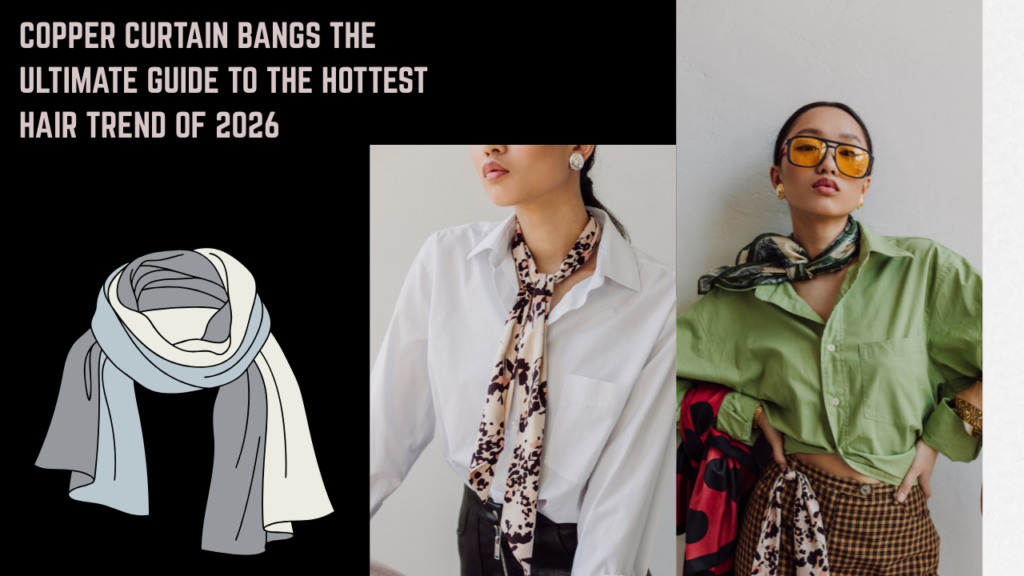
A statement scarf has the power to completely transform an outfit — but only when chosen correctly. The wrong scarf with the wrong outfit creates visual chaos. The right scarf with the right outfit creates effortless, polished style that looks intentional, confident, and genuinely chic.
The difference between a scarf that elevates and one that overwhelms comes down to understanding a handful of principles — colour coordination, proportion, fabric selection, pattern matching, and occasion appropriateness. Master these principles and you will always be able to walk into a shop, pick up a scarf, and know immediately whether it will work with what you already own.
This ultimate guide covers everything you need to know about choosing the perfect statement scarf for any outfit — the principles, the formulas, the rules, and the creative freedom to break them.
Why Choosing the Right Scarf Matters
A scarf is not a neutral accessory. Unlike a simple gold chain or a pair of stud earrings that disappear quietly into an outfit, a statement scarf demands attention. It introduces colour, pattern, texture, and volume — all of which interact with your outfit in ways that either create harmony or create conflict.
The good news: choosing the right scarf is a learnable skill. Once you understand the principles in this guide, what feels like an intimidating fashion decision becomes an intuitive, enjoyable part of getting dressed.
PRINCIPLE 1: UNDERSTAND SCARF TYPES AND THEIR PURPOSES
Before choosing a specific scarf, understanding which scarf type suits which purpose eliminates the most common scarf mistakes.
The Silk Square (70x70cm to 90x90cm)
What it is: The most iconic scarf format — a square of silk or silk-like fabric in a printed pattern.
What it does best:
- Neck ties in the classic Parisian style
- Head wraps and hair accessories
- Bag accessories tied to handles or straps
- Worn as a top or bandeau
- Pocket squares
When to choose it:
- When you want the most versatile scarf format
- When you want a traditional, elegant scarf look
- When the scarf will be used in multiple ways
What to look for: Quality silk squares have a weighted, fluid drape that cheaper polyester alternatives cannot replicate. The hand-rolled edge (visible when you look closely at the border) is the mark of a quality silk square — machine-rolled edges are flatter and less beautiful.
The Long Rectangle Scarf (30–40cm wide x 150–200cm long)
What it is: The most traditional scarf format — a long, narrow rectangle worn around the neck.
What it does best:
- Wrapping around the neck for warmth
- Draping over shoulders
- Tying in multiple neck configurations
- Wearing as a belt through trouser loops
When to choose it:
- When warmth is a priority alongside style
- When you want the most traditional scarf look
- When you want maximum draping length
The Bandana (50x50cm)
What it is: A smaller square scarf — traditionally cotton but available in silk and other materials.
What it does best:
- Hair accessories — tied around ponytails, braids, or as headbands
- Neck accessories — folded into a narrow strip and tied loosely
- Bag accessories
- Wrist accessories
When to choose it:
- When you want a casual, everyday scarf accessory
- When the scarf will primarily be used as a hair or bag accessory
- When you prefer a smaller, more subtle scarf statement
The Blanket Scarf (130x180cm+)
What it is: An oversized, usually wool or cashmere-blend scarf large enough to function as a shawl or wrap.
What it does best:
- Cold-weather warmth with style
- Draped over shoulders as a shawl
- Wrapped around the body
- Used as a throw or travel blanket
When to choose it:
- In autumn and winter
- When warmth is as important as style
- When you want a dramatic, enveloping scarf look
The Chiffon Rectangle
What it is: A lightweight, sheer rectangle scarf in chiffon or georgette.
What it does best:
- Evening and occasion wear — draped over shoulders
- Romantic, flowing neck knots
- Summer scarf looks where weight and warmth are not needed
When to choose it:
- For evenings and occasions
- In summer and warm weather
- When you want a soft, romantic, flowing scarf effect
PRINCIPLE 2: MASTER COLOUR COORDINATION
Colour is the most important factor in scarf selection — and the most commonly misunderstood. There are three reliable approaches to scarf colour coordination, each producing a different aesthetic result:
Approach 1: The Complementary Contrast
Choose a scarf in a colour that sits opposite your outfit colour on the colour wheel. Complementary colours create the most vibrant, energetic visual contrast — they make each other appear more vivid and intense.
The most useful complementary pairs for scarf styling:
- Blue outfit + orange/rust scarf
- Green outfit + red/burgundy scarf
- Purple outfit + yellow/mustard scarf
- Navy outfit + orange/copper scarf
- Teal outfit + coral/terracotta scarf
When this works best: When your outfit is a solid colour and you want maximum visual impact from the scarf. The complementary contrast approach is the most attention-commanding and the most fashion-forward.
The formula: One solid outfit colour + one complementary scarf colour = a bold, intentional statement.
Approach 2: The Tonal Harmony
Choose a scarf in a colour within the same family as your outfit — lighter or darker, warmer or cooler, but related. Tonal dressing creates a sophisticated, cohesive, and polished effect.
Tonal examples:
- Camel trousers + rust scarf + tan bag = a warm earth tone tonal look
- Navy jacket + cobalt blue scarf + indigo jeans = a blue tonal look
- Cream blouse + ivory scarf + white trousers = a cool white tonal look
- Forest green coat + sage green scarf + olive boots = a green tonal look
When this works best: When you want a sophisticated, put-together look without obvious contrast. The tonal approach is the most wearable and the most professional.
The formula: Three variations within one colour family = effortless tonal dressing.
Approach 3: The Neutral Anchor
Choose a neutral scarf (cream, black, camel, grey, or white) that works with virtually any outfit colour. Or conversely, wear a bold patterned scarf with a completely neutral (all-black, all-white, or all-camel) outfit.
When this works best:
- When you are new to scarf styling and want a reliable, foolproof approach
- When your outfit is already colourful or patterned and you want a scarf that does not compete
- When you want maximum versatility from a single scarf purchase
The formula: Bold outfit + neutral scarf = the scarf provides texture without adding colour. Neutral outfit + bold scarf = the scarf provides all the colour and becomes the focal point.
The Colour Rule Most People Forget: Pull One Colour From the Scarf
When wearing a printed scarf, the most sophisticated approach is to pick up ONE colour from the scarf print in another element of your outfit — a bag, a shoe, a belt, or a piece of jewellery in the same colour as one of the scarf’s tones. This creates a deliberately coordinated look that appears thoughtfully assembled rather than accidentally matched.
Example: A silk square with a print containing navy, cream, rust, and gold worn with a cream outfit and rust heels — the rust in the shoes matches the rust in the scarf print, creating a cohesive, intentional colour story.
PRINCIPLE 3: MATCH FABRIC TO OCCASION
The fabric of a scarf communicates as much as its colour or pattern — silk reads as elegant and occasion-appropriate, cotton reads as casual, wool reads as practical and cosy.
Silk and Silk-Like Fabrics
Communicates: Elegance, luxury, formality, occasion
Best for:
- Professional and business environments
- Evening and occasion wear
- Smart casual outfits where you want to elevate the look
- The classic Parisian scarf look
Important note: True silk scarves require hand washing and careful storage. Silk-look polyester alternatives are significantly more practical for daily use and can achieve a similar visual effect at a lower price and care commitment.
Wool and Cashmere
Communicates: Warmth, quality, classic style, autumn/winter dressing
Best for:
- Cold-weather outfits
- Country and casual settings
- Classic, timeless dressing
- Practical warmth without sacrificing style
The investment piece: A quality cashmere scarf is one of the best fashion investments available — it lasts decades, improves with age and washing, and provides genuinely luxurious warmth and softness.
Cotton and Jersey
Communicates: Casual, relaxed, everyday
Best for:
- Casual everyday outfits
- Sports and outdoor activities
- Summer and warm-weather wear
- Easy-care, washable scarf accessories
Chiffon and Georgette
Communicates: Feminine, romantic, occasion-appropriate, flowing
Best for:
- Evening wear and occasions
- Summer outdoor events
- Romantic or bohemian outfit aesthetics
- Flowing, draped scarf styling
PRINCIPLE 4: UNDERSTAND PATTERN MIXING
Wearing a patterned scarf with a patterned outfit is the most advanced scarf styling skill — and when done correctly, it creates the most visually interesting and fashion-forward results. The principles:
The Safe Rule: One Pattern at a Time
The simplest and most reliable approach — wear your patterned scarf with a solid outfit, or wear a patterned outfit with a simple solid scarf. This eliminates pattern-mixing complexity entirely and always produces a clean, wearable result.
Pattern Mixing Rule 1: Vary the Scale
When mixing two patterns, one must be significantly larger than the other. A fine stripe outfit with a large geometric print scarf works because the scale difference prevents the patterns from competing.
Scale mixing examples:
- Fine pinstripe suit + large abstract print scarf ✅
- Medium floral dress + fine stripe scarf ✅
- Bold geometric print top + small polka dot scarf ✅
- Medium floral top + medium floral scarf ❌ (too similar in scale — creates visual confusion)
Pattern Mixing Rule 2: Keep Colours Consistent
When mixing patterns, at least one colour should appear in both patterns — creating a visual link that makes the combination feel intentional rather than accidental.
Example: A plaid blazer with navy, cream, and rust + a silk scarf with navy, cream, and gold. The navy and cream appear in both patterns — creating the colour link that makes the pattern mix work.
Pattern Mixing Rule 3: Use a Solid to Separate
When two bold patterns risk overwhelming each other — separate them with a solid colour in between. A solid-colour top between a plaid coat and a printed scarf prevents the patterns from clashing.
Patterns That Mix Beautifully:
Stripe + floral: The most classic pattern combination in fashion. Choose a stripe with at least one colour from the floral.
Animal print + solid: Animal print functions almost as a neutral — it pairs with virtually any solid colour.
Geometric + organic: The hard lines of geometric patterns contrast beautifully with the flowing lines of floral or abstract patterns.
Plaid + stripe: Works when the stripe is significantly finer or bolder than the plaid check.
PRINCIPLE 5: PROPORTION AND SCALE
The physical size and volume of a scarf must be proportionate to the outfit and the body wearing it.
Scarf Volume vs Outfit Volume
High-volume outfit (oversized coat, wide-leg trousers, voluminous dress) + large scarf: Can feel overwhelming. Consider a smaller scarf style (neck tie, bag accessory) rather than a large wrapped neck scarf.
Slim, fitted outfit (skinny jeans, fitted blazer, bodycon dress) + large scarf: The contrast between slim silhouette and voluminous scarf creates beautiful visual interest. A blanket scarf or large silk square draped over a fitted outfit is one of the most flattering scarf combinations.
Casual, relaxed outfit + small scarf: A bandana tied in the hair or around a bag handle provides a hint of personality without adding physical volume.
Scarf Length vs Body Proportion
Petite frames: Shorter scarves and bandanas are most proportionate. Very long, heavy blanket scarves can overwhelm a smaller frame. When wearing longer scarves, keep the ends tucked or wrapped rather than hanging to the knees.
Taller frames: Can wear longer, larger scarves with ease. A blanket scarf or a very long rectangle scarf draped dramatically creates a striking, proportionate effect.
Broader shoulders: Scarves draped horizontally across the shoulders can add further width. Consider a scarf worn at the neck or in the hair rather than across the shoulder line.
PRINCIPLE 6: OCCASION APPROPRIATENESS
The same scarf that works beautifully at a weekend brunch feels out of place in a board meeting — and vice versa. Matching the scarf’s energy to the occasion is as important as matching its colour to the outfit.
Professional and Business Settings
Best scarves: Silk squares in classic prints (geometric, abstract, fine stripe), worn as a neck tie or draped over a blazer. Neutral or jewel-tone colour palette.
Avoid: Very bright or novelty prints, very voluminous scarf styles, casual cotton or jersey scarves.
The professional scarf formula: A classic silk square in navy, burgundy, or forest green with a tailored blazer creates a polished, authoritative look that signals confidence and attention to detail.
Casual Everyday
Best scarves: Cotton bandanas, lightweight rectangle scarves, jersey knit scarves. Any colour or pattern that reflects your personal style.
Freedom: Everyday casual is where the most creative scarf experimentation works best. The hair ribbon, bag accessory, and playful neck knot are all at home in casual dressing.
Evening and Occasions
Best scarves: Silk, chiffon, or satin scarves in jewel tones or elegant prints. Worn draped over shoulders, loosely knotted at the neck, or tied delicately in the hair.
Avoid: Very casual cotton scarves, sporty or athletic scarf styles.
Outdoor and Active Settings
Best scarves: Lightweight cotton or technical fabric scarves. Secure-fitting styles that will not blow off in the wind.
Practical considerations: For genuinely outdoor activities, consider a more secure tying method — a knot at the nape of the neck rather than a loose drape.
PRACTICAL SCARF SELECTION GUIDE
When you are buying a new scarf — ask these questions:
1. Does it work with at least three things I already own? A scarf that only works with one outfit is an expensive single-use accessory. Before buying, mentally cycle through your wardrobe and identify at least three outfits the scarf would work with.
2. Does it introduce a colour I actually wear? A scarf in a colour you rarely wear will rarely be used regardless of how beautiful it is in isolation. Choose colours that genuinely fit your wardrobe palette.
3. Is the quality appropriate for the price? Run the scarf through your fingers — silk should feel smooth, cool, and weighted. Wool should feel soft and springy. A poorly finished scarf at a high price is not a good investment.
4. Does the pattern scale work for how I want to wear it? A very large pattern that looks beautiful as a draped shawl can look crowded and overwhelming when tied as a small neck knot. Consider how the pattern reads at different sizes depending on your intended styling.
5. Is it appropriate for my most common occasions? Buy scarves for the life you actually live — not the life you aspire to live. If you primarily dress casually, a collection of beautiful silk squares may spend more time in the drawer than on your neck.
The Three Scarf Combinations That Always Work
For days when decision-making feels too difficult, these three combinations are reliably beautiful:
The Foolproof 1: All-black outfit + a silk square in any colour or print = instant elevation without any coordination complexity.
The Foolproof 2: Neutral tonal outfit (any combination of camel, cream, and brown) + a warm-toned printed scarf (rust, terracotta, burnt orange) = sophisticated, warm, and effortless.
The Foolproof 3: Simple jeans and white shirt + a bold, colourful silk square tied loosely around the neck = the Parisian classic that never fails.
Building the Perfect Capsule Scarf Collection
Rather than accumulating many scarves, build a focused collection of five that cover every occasion and outfit combination:
Scarf 1 — The Everyday Silk Square: A classic printed silk square in your most-worn colour family. This scarf should work with the majority of your existing wardrobe.
Scarf 2 — The Bold Statement: A scarf in a colour or print that is more adventurous than your usual palette — the scarf you reach for when you want your outfit to turn heads.
Scarf 3 — The Cold Weather Essential: A quality wool or cashmere rectangle scarf in a neutral (camel, grey, or cream) that pairs with every coat and winter outfit.
Scarf 4 — The Evening Piece: A silk or chiffon scarf in a jewel tone or elegant print — reserved for occasions, evenings out, and moments when you want to feel genuinely dressed up.
Scarf 5 — The Casual Bandana: A cotton bandana or small square in a bold solid colour — for hair accessories, bag ties, and casual everyday dressing.
Five scarves covering every occasion — the most versatile and most curated approach to scarf ownership.
Final Thoughts
Choosing the perfect statement scarf is not about following rigid rules — it is about understanding principles well enough to apply them intuitively and break them confidently. The colour wheel, the fabric hierarchy, and the occasion guide in this guide are starting points — not constraints.
The most important principle of all: a scarf you feel genuinely beautiful and confident in will always be the right choice, regardless of whether it follows every guideline in this article.