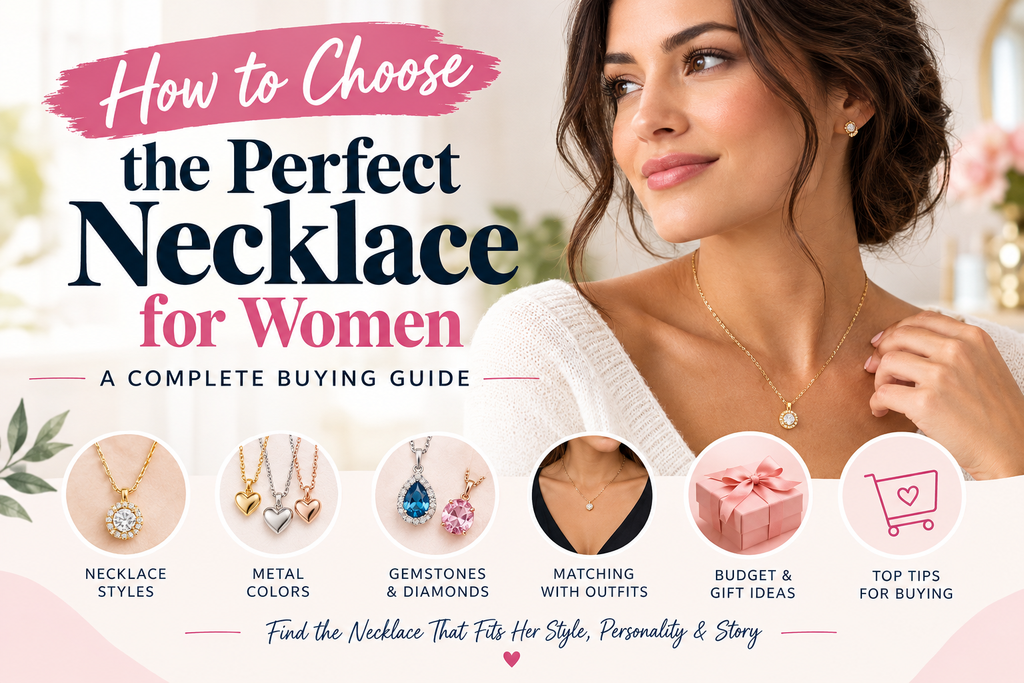
How to Choose the Perfect Necklace for Women A Complete Buying Guide
How to Choose the Perfect Necklace for Women A Complete Buying Guide
This post contains affiliate links. If you purchase through one of these links, we may earn a small commission at no extra cost to you.
A necklace can be the easiest piece of jewelry to buy — or the easiest to get wrong. Unlike a ring or a pair of earrings, a necklace has to work with someone’s neckline, their body proportions, the clothes they already own, and the way they layer jewelry day to day. This guide walks through everything worth thinking about before you buy, whether it’s for yourself or as a gift.
Step 1: Start With Neck and Face Shape
Necklaces frame the face and collarbone the same way earrings frame the jaw, so shape matters more than most people realize.
- Round or full face: Longer necklaces (20 inches and up) and V-shaped pendants create a slimming, elongating effect.
- Long or narrow face: Shorter chokers and collar-length necklaces (14–16 inches) add width and balance.
- Square or angular face: Rounded pendants and curved designs soften strong jawlines.
- Heart-shaped face: Layered necklaces of varying lengths draw the eye downward and balance a narrower chin.
If you’re buying for someone else and don’t know their face shape off the top of your head, a mid-length chain (18 inches) is the safest universal choice.
Step 2: Match the Length to the Neckline
This is the single biggest factor in whether a necklace actually gets worn. As a rule of thumb:
| Neckline | Best Necklace Length |
|---|---|
| Crew neck / high neckline | Choker (14–16″) or long pendant (24″+) to avoid competing with the collar |
| V-neck | Pendant that follows the V, typically 18–20″ |
| Scoop or boat neck | Collar-length (16–18″) sits naturally in the open space |
| Off-the-shoulder / strapless | Choker or collar-length draws attention to bare shoulders |
| Turtleneck | Long layered chains (24″+) worn over the fabric |
If in doubt, an 18-inch chain — sometimes called “princess length” — is the most versatile option and looks good with the widest range of necklines.
Step 3: Choose a Metal That Matches Their Existing Jewelry
Before buying anything, look at what the person already wears most:
- Yellow gold pairs with warmer skin tones and reads as classic and timeless.
- White gold or silver suits cooler skin tones and pairs easily with everyday, casual pieces.
- Rose gold is a warmer, softer alternative that flatters most skin tones.
- Mixed metal is the safest choice if you’re unsure — it’s designed to work with both gold and silver pieces already in someone’s collection.
If they wear the same metal in their watch, rings, or everyday earrings, matching that metal is almost always the right call.
Step 4: Decide Between Fine, Fashion, and Demi-Fine Jewelry
Not every necklace needs to be solid gold, and understanding the categories helps you set the right budget expectations:
- Fine jewelry — solid gold or sterling silver, often with genuine gemstones. Higher cost, but it lasts a lifetime and can be resized, repaired, or passed down.
- Demi-fine jewelry — gold vermeil or gold-filled pieces over sterling silver. A strong middle ground: better durability than costume jewelry, without the price tag of solid gold.
- Fashion (costume) jewelry — plated base metals, budget-friendly and great for trend pieces you might not wear in five years.
A good rule: invest in fine or demi-fine jewelry for pieces meant to be worn daily and passed down, and save fashion jewelry for statement or trend-driven pieces.
Step 5: Think About How They’ll Actually Wear It
- Daily wearer? Look for tarnish-resistant, waterproof-rated pieces so it can survive showers, workouts, and sleep without damage.
- Special-occasion only? You have more freedom to go bolder, more delicate, or more intricate, since it won’t face daily wear and tear.
- Layers their jewelry? Choose pieces in varying lengths and thin enough not to tangle with what they already wear.
- Sensitive skin? Stick to nickel-free, hypoallergenic metals like sterling silver, solid gold, or titanium.
Step 6: Consider the Occasion
- Everyday wear: Simple pendants, thin chains, or a single meaningful charm.
- Work or professional settings: Understated pieces that don’t make noise or catch on clothing — think delicate bar pendants or simple chains.
- Milestone gifts (graduation, birthday, anniversary): Something with lasting sentimental value, like a birthstone, initial, or diamond pendant.
- Formal events: Statement pieces, pearls, or gemstone necklaces that can stand up to a dressier outfit.
Step 7: Personalize When It Makes Sense
Personalized necklaces — initials, birthstones, zodiac symbols, coordinates, or engraved messages — tend to carry more emotional weight than an unpersonalized piece at the same price point. They’re especially strong choices for gifts marking a specific relationship or milestone, since they can’t be mistaken for anyone else’s necklace.
Step 8: Set a Realistic Budget
- Under $50: Fashion jewelry, beaded pieces, simple gold-filled or silver-plated chains.
- $50–$200: Demi-fine jewelry — gold vermeil, gold-filled, sterling silver with semi-precious stones.
- $200–$1,000: Solid gold or silver pieces, small diamond or gemstone accents.
- $1,000+: Fine jewelry with larger diamonds or precious gemstones, designer pieces.
There’s no “correct” amount to spend — the best necklace is one that matches how it’ll actually be worn, not necessarily the most expensive option available.
Quick Buying Checklist
- Does the length suit the neckline it’ll most often be worn with?
- Does the metal match what they already wear?
- Is it durable enough for how often they’ll wear it (waterproof if daily)?
- Does the price point match the “fine vs. fashion” category you actually want?
- Would personalization make it more meaningful without overcomplicating it?
Frequently Asked Questions
What’s the most universally flattering necklace length? An 18-inch chain works with the widest range of necklines and face shapes, making it the safest choice if you’re unsure.
Should I buy real gold or gold-plated? If it’ll be worn daily, gold-filled or solid gold holds up far better over time than gold-plated, which wears off with regular contact. Gold-plated pieces are fine for occasional wear or trend pieces.
How do I know if a necklace is real gold? Look for a stamp indicating karat (10K, 14K, 18K) or purity for silver (925). No stamp usually means it’s costume or fashion jewelry rather than fine jewelry.
Can I layer necklaces of different metals? Yes — mixed-metal layering is a well-established style, though sticking to one dominant metal with small accents in another tends to look more intentional than an even split.
Disclosure: This article contains affiliate links. As an affiliate, we may earn a commission from qualifying purchases, at no additional cost to you.