Best Hair Growth Serums for Thinning Hair 10 Products to Consider
Best Hair Growth Serums for Thinning Hair 10 Products to Consider
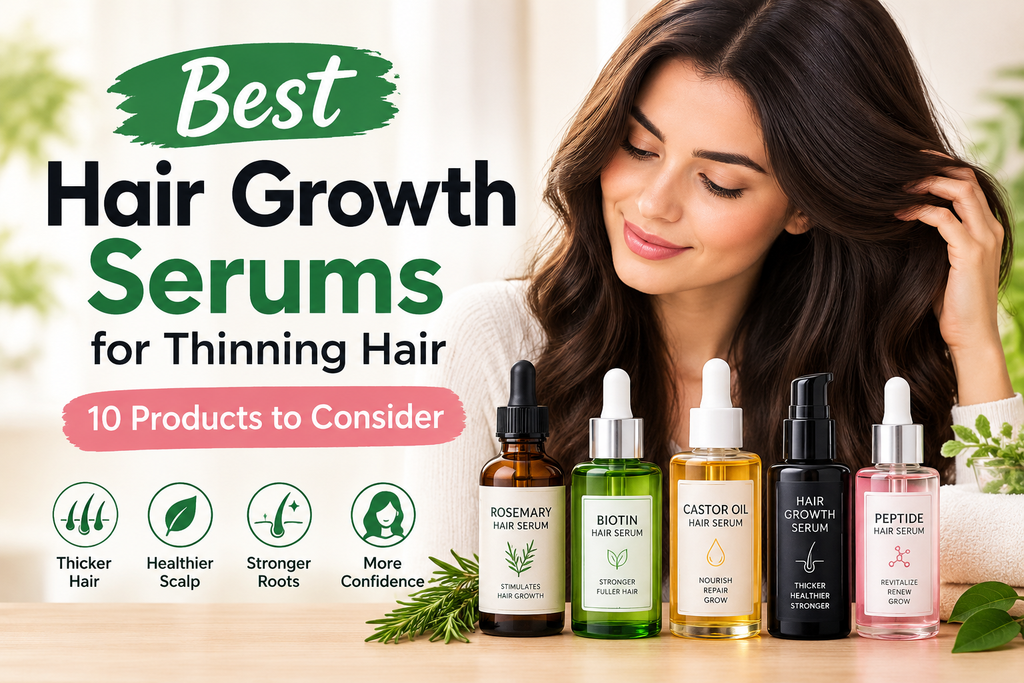
This post contains affiliate links. If you purchase through one of these links, we may earn a small commission at no extra cost to you. This article is for informational purposes only and is not medical advice — see a dermatologist for a diagnosis and personalized treatment plan.
Thinning hair is one of the most common — and most emotionally loaded — beauty concerns out there, and it affects people of every age and hair type. The good news: the hair serum category has come a long way, with formulas now ranging from FDA-approved minoxidil treatments to peptide- and botanical-based alternatives for people who want a gentler approach. Below are 10 well-regarded options to consider, organized by what makes each one different.
What to Look for in a Hair Growth Serum
Before diving into specific picks, it helps to know what you’re actually looking for on the label:
- Minoxidil is the only over-the-counter ingredient FDA-approved for hair regrowth, backed by decades of clinical research.
- Peptides (like Redensyl, Procapil, or Capixyl) are newer, minoxidil-free actives designed to support the hair growth cycle and reduce shedding.
- Botanical extracts (rosemary, red clover, saw palmetto, caffeine) are gentler, longer-studied ingredients often used in “preventive” or maintenance formulas.
- Consistency matters more than the brand. Nearly every product on this list requires 90 or more days of daily use before you’ll see a meaningful difference, and results typically reverse if you stop.
1. Women’s Rogaine 5% Minoxidil Foam
The best-known name in hair regrowth for a reason: minoxidil remains the only over-the-counter ingredient with strong, long-term clinical backing for regrowing hair.
Best for: Anyone who wants the most clinically established option and is comfortable with a daily topical foam. Note: Minoxidil can cause scalp irritation or unwanted facial hair growth in some users, and results fade if you stop using it — talk to a doctor before starting, especially if pregnant or nursing.
2. Vegamour GRO+ Advanced Hair Serum
A vegan, minoxidil-free serum built around plant-based active ingredients aimed at reducing shedding and supporting density over time.
Best for: People who want a drug-free option and don’t mind a premium price point.
3. Nutrafol Women’s Hair Serum
A lightweight, low-residue serum from a brand better known for its oral supplements, formulated with clinically studied botanicals aimed at scalp inflammation and shedding.
Best for: Someone already taking a hair-growth supplement who wants a topical to pair with it.
4. The Ordinary Multi-Peptide Serum for Hair Density
A budget-friendly entry from a brand known for straightforward, ingredient-focused formulas, built around peptides designed to support the look of denser hair.
Best for: First-timers who want to try a peptide serum without a big financial commitment.
5. The INKEY List Collagen Peptide Serum
Another accessible, ingredient-transparent option, this one leaning on collagen peptides to support strand strength alongside scalp health.
Best for: Anyone building a simple, affordable routine from the ground up.
6. Kérastase Initialiste Advanced Scalp and Hair Serum
A salon-grade, dermatologist-developed formula that leans into overall hair quality — thickness, resilience, and shine — rather than only targeting shedding.
Best for: Someone who wants a “skincare for hair” experience and is willing to pay a premium for it.
7. Nioxin Night Density Rescue Serum
An overnight leave-in treatment designed to work while you sleep, positioned as a drugstore-accessible pick for daily density support.
Best for: Anyone who prefers to build serum use into a nighttime routine rather than a morning one.
8. DS Laboratories Revita Hair Thickening Serum
Marketed as a minoxidil-alternative, this serum combines a range of actives aimed at supporting the scalp environment for thicker-looking hair over time.
Best for: People who’ve tried minoxidil and want to explore a non-drug alternative.
9. Pura d’Or Anti-Thinning Advanced Therapy Serum
Formulated around DHT-blocking botanical ingredients — DHT being a hormone byproduct linked to pattern thinning — this serum targets one of the root causes rather than just the symptoms.
Best for: Anyone whose thinning appears related to hereditary or hormonal pattern loss.
10. SheaMoisture Jamaican Black Castor Oil Strengthen & Restore Serum
A more traditional, oil-based formula built around Jamaican black castor oil, long used in textured-hair communities for scalp nourishment and strand strength.
Best for: Curly, coily, or textured hair types looking for a heavier, more moisturizing formula.
How to Use a Hair Growth Serum for Best Results
- Apply to a clean, dry or towel-dried scalp — product doesn’t absorb well over oil or buildup.
- Part your hair in sections so the serum reaches the scalp directly, not just the strands.
- Massage in for 1–3 minutes to help absorption and stimulate circulation.
- Don’t rinse it out — most hair serums are leave-in formulas.
- Stick with it daily for at least 3–6 months before judging results, since that’s roughly how long one hair growth cycle takes.
Frequently Asked Questions
How long does it take to see results from a hair growth serum? Most people need 3–6 months of consistent, daily use before noticing a real difference, since hair grows in cycles that take time to shift.
Are minoxidil-free serums as effective as minoxidil? Minoxidil has the strongest and longest clinical track record of any over-the-counter option. Peptide and botanical serums can still support scalp health and reduce shedding for some users, but the evidence behind them is generally less extensive.
Can I use a hair growth serum if I’m pregnant or nursing? Some ingredients, particularly minoxidil, aren’t recommended during pregnancy or breastfeeding. Check with your doctor before starting any hair growth product in that situation.
When should I see a dermatologist instead of trying serums on my own? If thinning is sudden, patchy, accompanied by scalp pain or itching, or you suspect an underlying hormonal or medical cause, it’s worth getting a professional diagnosis before self-treating — some causes of hair loss need more than a topical serum to address.
Disclosure: This article contains affiliate links. As an affiliate, we may earn a commission from qualifying purchases, at no additional cost to you. This content is not medical advice; consult a dermatologist or healthcare provider for guidance specific to your situation.