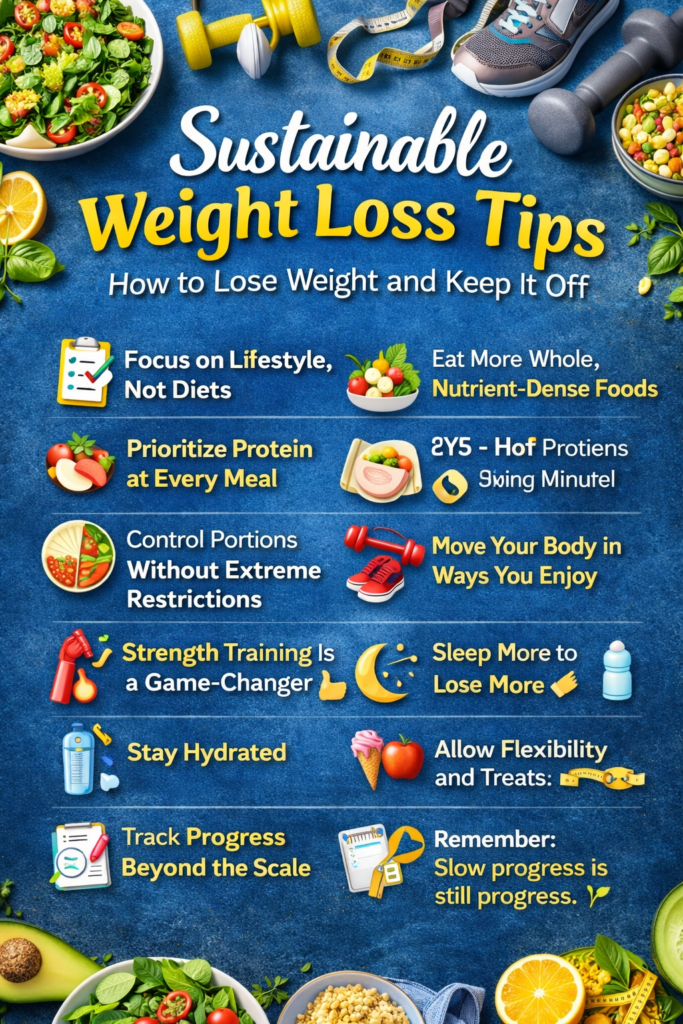
Sustainable Weight Loss Tips How to Lose Weight and Keep It Off
Sustainable Weight Loss Tips How to Lose Weight and Keep It Off
Most people don’t struggle with losing weight—they struggle with keeping it off. Crash diets and extreme workouts may work short-term, but they often lead to burnout and weight regain. Sustainable weight loss focuses on building habits you can stick with for life.
Below are proven, realistic tips to help you lose weight in a healthy, lasting way.
What Is Sustainable Weight Loss?
Sustainable weight loss means:
- Gradual fat loss (not extreme dieting)
- Healthy habits you can maintain long-term
- Improved energy, health, and confidence
The goal isn’t perfection—it’s consistency.
1. Focus on Lifestyle, Not Diets
Temporary diets give temporary results. Instead of following strict rules:
- Build healthy eating patterns
- Allow flexibility and balance
- Avoid labeling foods as “good” or “bad”
Weight loss becomes easier when it fits into your life, not the other way around.
2. Eat More Whole, Nutrient-Dense Foods
Whole foods help regulate appetite and reduce cravings naturally.
Focus on:
- Lean proteins (eggs, chicken, fish, beans)
- Fruits and vegetables
- Whole grains (oats, quinoa, brown rice)
- Healthy fats (avocado, olive oil, nuts)
These foods keep you full longer and support fat loss.
3. Prioritize Protein at Every Meal
Protein is key for sustainable weight loss.
Benefits:
- Increases metabolism
- Reduces hunger
- Preserves muscle mass
Aim to include a protein source with every meal to prevent overeating later in the day.
4. Control Portions Without Extreme Restrictions
You don’t need to starve to lose weight. Portion awareness makes a big difference.
Simple tips:
- Use smaller plates
- Fill half your plate with vegetables
- Eat slowly and mindfully
Small changes add up over time.
5. Move Your Body in Ways You Enjoy
Exercise shouldn’t feel like punishment.
Try:
- Walking
- Dancing
- Strength training
- Cycling or swimming
Consistency matters more than intensity. Find movement you enjoy and stay active regularly.
6. Strength Training Is a Game-Changer 💪
Building muscle increases your resting metabolism.
Even 2–3 strength sessions per week can:
- Burn more calories long-term
- Improve body shape
- Prevent weight regain
You don’t need a gym—bodyweight workouts work too.
7. Sleep More to Lose More 😴
Sleep is often overlooked, but it directly affects weight.
Poor sleep:
- Increases hunger hormones
- Triggers cravings
- Slows metabolism
Aim for 7–9 hours of quality sleep each night.
8. Stay Hydrated
Sometimes hunger is actually thirst.
Water helps by:
- Controlling appetite
- Supporting digestion
- Boosting metabolism
Drink water before meals and throughout the day.
9. Allow Flexibility and Treats
Sustainable weight loss allows enjoyment.
- Eat your favorite foods occasionally
- Follow the 80/20 rule (80% healthy, 20% flexible)
- Avoid guilt around food
Restriction leads to binge cycles—balance prevents them.
10. Track Progress Beyond the Scale
The scale doesn’t tell the full story.
Track:
- Energy levels
- Body measurements
- Strength gains
- How clothes fit
Non-scale victories matter just as much.
Common Mistakes to Avoid
🚫 Skipping meals
🚫 Cutting carbs completely
🚫 Over-exercising
🚫 Expecting fast results
🚫 Comparing yourself to others
Sustainable weight loss takes patience—but it works.
Final Thoughts
The best weight loss plan is the one you can maintain. Focus on small, consistent habits, not drastic changes. When health becomes the priority, weight loss follows naturally.
Remember:
Slow progress is still progress. 🌱