Healthy Eating for Weight Loss
Losing weight does not require extreme dieting or cutting out entire food groups. Healthy eating for weight loss is about creating balanced meals, developing sustainable habits, and making smarter food choices that nourish your body while helping you maintain a calorie deficit.
Focus on Whole, Nutrient-Dense Foods
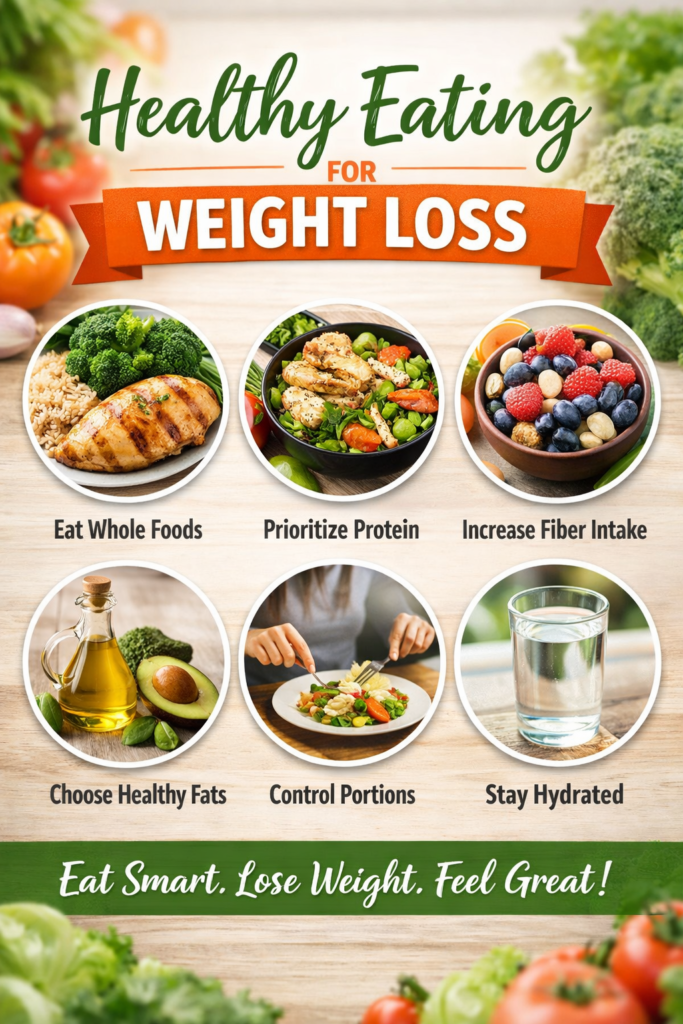
Whole foods should be the foundation of any healthy weight-loss plan. These include vegetables, fruits, whole grains, lean proteins, and healthy fats. They are rich in nutrients, high in fiber, and naturally more filling, which helps control hunger and reduce overeating.
Examples include leafy greens, berries, oats, brown rice, eggs, fish, chicken, beans, nuts, and seeds.
Prioritize Protein in Every Meal
Protein plays a key role in weight loss by increasing fullness, preserving muscle mass, and boosting metabolism. Including a source of protein in each meal can help reduce cravings and prevent unnecessary snacking.
Good protein sources include eggs, lean meats, fish, Greek yogurt, tofu, lentils, and beans.
Eat More Fiber-Rich Foods
Fiber slows digestion and helps you feel full for longer periods. A high-fiber diet also supports gut health and stabilizes blood sugar levels.
Foods high in fiber include vegetables, fruits with skin, legumes, whole grains, chia seeds, and flaxseeds.
Choose Healthy Fats in Moderation
Healthy fats are essential for hormone balance and overall health, but portion control is important. Including small amounts of healthy fats can improve satiety and make meals more satisfying.
Sources of healthy fats include avocados, olive oil, nuts, seeds, and fatty fish like salmon.
Control Portions Mindfully
Healthy foods still contain calories, so portion control matters. Eating slowly, using smaller plates, and paying attention to hunger and fullness cues can help prevent overeating without feeling restricted.
Reduce Added Sugars and Processed Foods
Highly processed foods and sugary drinks are calorie-dense and low in nutrients. They often lead to spikes in blood sugar and increased cravings. Limiting sweets, fast food, and packaged snacks can significantly improve weight-loss results.
Stay Hydrated
Drinking enough water supports digestion, reduces hunger, and helps prevent confusing thirst with hunger. Starting meals with a glass of water can also help with portion control.
Build Consistent, Sustainable Habits
Weight loss is not about perfection—it’s about consistency. Planning meals ahead, cooking at home, and allowing occasional treats can help you stay on track long term without feeling deprived.
Conclusion
Healthy eating for weight loss focuses on balance, nutrition, and sustainability rather than strict rules or quick fixes. By choosing whole foods, prioritizing protein and fiber, managing portions, and staying consistent, you can lose weight in a healthy and maintainable way that supports overall well-being.