Easy Exercises to Boost Your Energy at Home
Easy Exercises to Boost Your Energy at Home
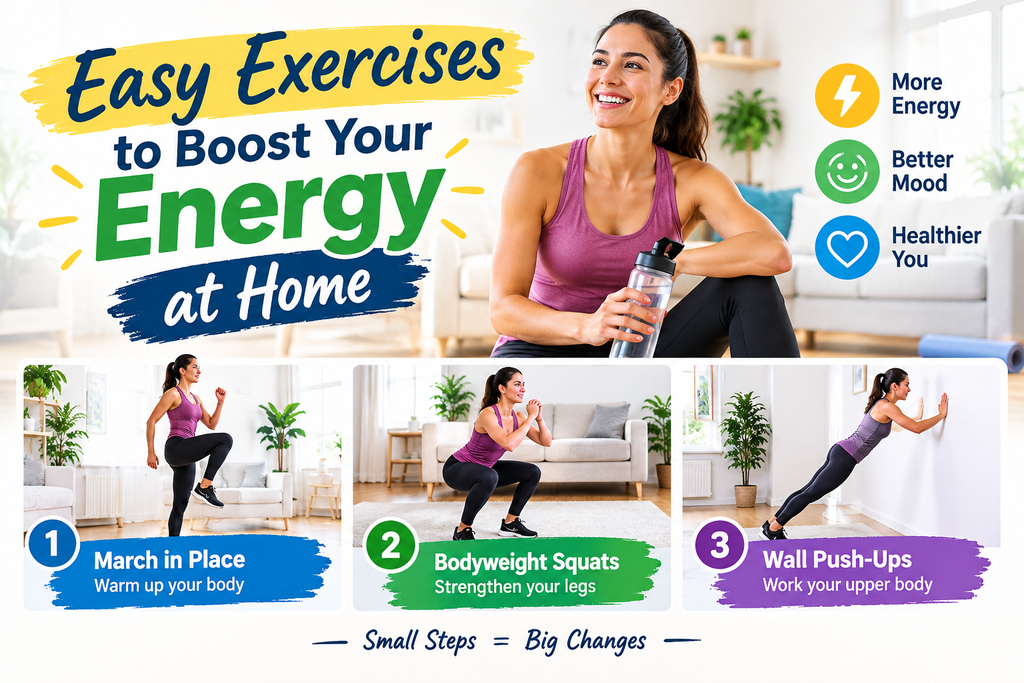
No gym, no equipment, no big time commitment: simple movements that help you feel more awake and alert.
It sounds backwards, but when you’re tired, the best thing you can often do is move. A short burst of light exercise can get your blood flowing, wake up your brain, and lift your mood, often more effectively than another cup of coffee. And you don’t need a gym membership or fancy gear to get the benefits.
This article shares simple, beginner-friendly exercises you can do at home in a few minutes, along with quick routines for mornings, afternoon slumps, and evenings. This is general wellness information, not medical advice. If you have a health condition, injury, or concerns about exercising, check with a healthcare professional first.
Why Exercise Boosts Energy
It may seem like exercise would drain you, but regular movement tends to do the opposite.
- Better circulation: Moving your body increases blood flow, helping deliver oxygen and nutrients to your muscles and brain.
- Improved mood: Physical activity triggers the release of endorphins and other feel-good chemicals, which can ease stress and lift your spirits.
- Stronger stamina over time: Regular activity strengthens your heart, lungs, and muscles, so everyday tasks feel easier.
- Better sleep: People who stay active often sleep more deeply, which means more energy the next day.
- Reduced stiffness: Sitting for long stretches can leave you feeling sluggish. Even brief movement breaks help.
The key is to keep it gentle and consistent. You don’t need to exhaust yourself. A few minutes of easy movement is often enough to feel the difference.
Before You Start
- Wear comfortable clothes and shoes, or go barefoot on a non-slip surface.
- Clear a small space. A yoga mat or a bit of floor room is plenty.
- Drink some water, especially if you’re feeling sluggish.
- Start slowly. Move at a pace that feels comfortable, and stop if you feel pain, dizziness, or unusual discomfort.
- Breathe steadily. Don’t hold your breath during exercises.
10 Easy Exercises to Boost Your Energy
1. Marching in Place
The simplest way to wake up your body. Stand tall and lift your knees one at a time as though you’re marching, swinging your arms in rhythm.
Try it: 1 minute, building up to 2 or 3 as you get comfortable.
Make it easier: Lift your knees lower and keep one hand on a counter for support.
Make it harder: Lift your knees higher and speed up.
2. Arm Circles
A great way to loosen tight shoulders and upper back after sitting at a desk. Stand with your feet hip-width apart, extend your arms out to your sides, and make small circles. After 15 seconds, reverse direction.
Try it: 30 seconds each direction.
3. Bodyweight Squats
Squats use some of the largest muscles in your body, which is why they wake you up so quickly. Stand with your feet shoulder-width apart, push your hips back as if sitting into a chair, keep your chest lifted, then stand back up.
Try it: 2 sets of 8 to 12 repetitions.
Make it easier: Squat down to a chair and stand back up.
4. Wall Push-Ups
A gentle version of a classic upper-body exercise. Stand about an arm’s length from a wall, place your hands on it at shoulder height, bend your elbows to bring your chest toward the wall, and push back.
Try it: 2 sets of 8 to 12 repetitions.
Make it harder: Move to a countertop, then the floor, as you get stronger.
5. Standing Side Bends
Stand with your feet hip-width apart, raise one arm overhead, and lean gently to the opposite side. This stretches your sides, opens your ribs, and encourages deeper breathing.
Try it: 5 slow bends per side.
6. Step-Ups
Use a sturdy step, stair, or low platform. Step up with one foot, bring the other foot up, then step back down. Alternate your leading leg.
Try it: 1 minute, then rest.
Safety tip: Use a stable surface and hold a railing if needed.
7. Glute Bridges
Lie on your back with your knees bent and your feet flat on the floor. Press through your heels to lift your hips toward the ceiling, squeeze your glutes at the top, then lower slowly.
Try it: 2 sets of 10 repetitions.
8. Cat-Cow Stretch
A gentle yoga movement that wakes up your spine. Start on your hands and knees. Inhale as you drop your belly and lift your chest (cow), then exhale as you round your back toward the ceiling (cat).
Try it: 8 to 10 slow rounds.
9. Jumping Jacks (Low-Impact Version)
A full-body classic. To lower the impact, step one foot out to the side while raising your arms, then step back and switch sides, instead of jumping.
Try it: 30 to 60 seconds.
Make it harder: Jump your feet out and in at a comfortable pace.
10. Deep Breathing with Reach
Sometimes your body simply needs more oxygen and a good stretch. Stand tall, inhale slowly as you raise your arms overhead, then exhale as you lower them. Repeat slowly.
Try it: 5 to 8 deep breaths.
Quick Energy Routines
Combine the exercises above into short routines that fit your day.
The 5-Minute Morning Wake-Up
- Arm circles: 30 seconds each direction
- Marching in place: 1 minute
- Bodyweight squats: 10 repetitions
- Standing side bends: 5 per side
- Deep breathing with reach: 5 breaths
The 5-Minute Afternoon Slump Buster
- Step-ups or marching: 1 minute
- Wall push-ups: 10 repetitions
- Low-impact jumping jacks: 45 seconds
- Bodyweight squats: 10 repetitions
- Deep breathing: 5 slow breaths
The 5-Minute Evening Unwind
- Cat-cow stretch: 8 rounds
- Glute bridges: 10 repetitions
- Standing side bends: 5 per side
- Slow deep breathing: 1 minute
The evening routine is gentler on purpose. Intense workouts close to bedtime can leave some people feeling too wired to sleep, so keep it easy.
A Simple Weekly Plan
| Day | Activity |
|---|---|
| Monday | 5-minute morning wake-up |
| Tuesday | Afternoon slump buster |
| Wednesday | 10-minute walk plus stretching |
| Thursday | 5-minute morning wake-up |
| Friday | Afternoon slump buster |
| Saturday | Longer walk or favorite activity |
| Sunday | Evening unwind and rest |
Feel free to adjust to your schedule and energy levels. The goal is consistency, not perfection.
Tips for Sticking With It
- Start tiny. Even 2 minutes counts. Small wins build habits.
- Anchor it to a habit. Exercise right after brushing your teeth or while your coffee brews.
- Set reminders. A phone alert or sticky note can nudge you to move.
- Move during breaks. Stand and stretch for a minute every hour if you sit for work.
- Play music. A favorite playlist can make five minutes fly by.
- Track your progress. A simple checklist or calendar helps you see your streak.
- Be kind to yourself. Missed a day? Just start again tomorrow.
Other Everyday Habits That Support Energy
Exercise works best alongside good basics:
- Sleep: Most adults do best with 7 or more hours per night.
- Hydration: Even mild dehydration can make you feel tired.
- Balanced meals: Regular meals with protein, fiber, and healthy fats help keep energy steady.
- Daylight: Morning light helps regulate your body clock and alertness.
- Stress management: Short breaks, breathing exercises, and time outdoors can all help.
When to Talk to a Doctor
It’s normal to feel tired now and then. But if you have persistent fatigue that doesn’t improve with rest, or if you experience chest pain, shortness of breath, dizziness, or other concerning symptoms during exercise, stop and speak with a healthcare professional. Ongoing tiredness can have many causes, and a doctor can help you find the right answers.
Final Thoughts
Boosting your energy doesn’t require an intense workout or a big time commitment. A few minutes of gentle movement, done regularly, can help you feel more alert, more positive, and more ready for the day. Pick two or three exercises that appeal to you, try them for a week, and see how you feel.
Your body is built to move, and often the best answer to feeling tired is a short, easy step in the right direction.
This article is for general informational purposes only and is not a substitute for professional medical advice, diagnosis, or treatment.