Weight Loss Meal Plan
Weight Loss Meal Plan
A weight loss meal plan helps you stay consistent, control portions, and make healthier food choices without feeling restricted. Instead of extreme diets, a balanced meal plan focuses on nutrient-dense foods that support fat loss, energy, and long-term results.
Why a Meal Plan Matters for Weight Loss
Planning meals in advance removes guesswork and reduces the temptation to choose unhealthy options. It ensures balanced nutrition, stable blood sugar levels, and proper calorie control, which are key factors for sustainable weight loss.
Key Principles of a Weight Loss Meal Plan
A successful meal plan is not about eating less—it’s about eating smarter.
1. Balanced Macronutrients
Each meal should include:
- Protein to keep you full and preserve muscle
- Complex carbohydrates for sustained energy
- Healthy fats for satiety and hormone balance
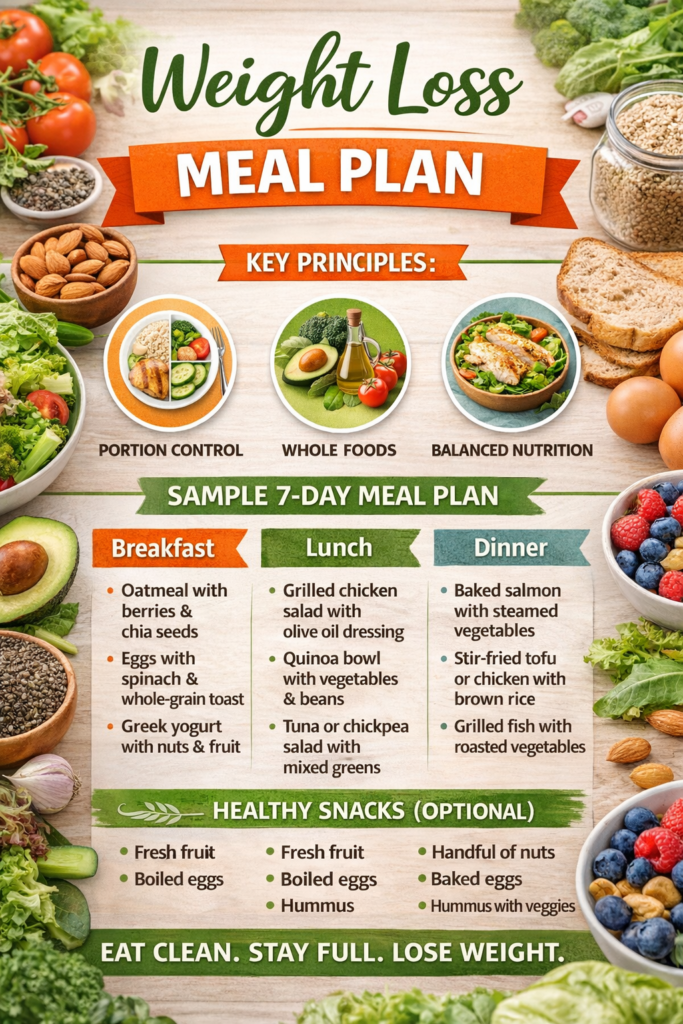
2. Focus on Whole Foods
Choose minimally processed foods such as vegetables, fruits, whole grains, lean proteins, and healthy fats. These foods are lower in calories but higher in nutrients.
3. Portion Control
Even healthy foods can cause weight gain if portions are too large. Using smaller plates and measuring portions can help manage calorie intake effectively.
Sample 7-Day Weight Loss Meal Plan
Breakfast Options
- Oatmeal with berries and chia seeds
- Eggs with spinach and whole-grain toast
- Greek yogurt with nuts and fruit
Lunch Options
- Grilled chicken salad with olive oil dressing
- Quinoa bowl with vegetables and beans
- Tuna or chickpea salad with mixed greens
Dinner Options
- Baked salmon with steamed vegetables
- Stir-fried tofu or chicken with brown rice
- Grilled fish with roasted vegetables
Healthy Snacks (Optional)
- Fresh fruit
- Handful of nuts
- Boiled eggs
- Hummus with vegetables
Hydration and Beverages
Drink plenty of water throughout the day. Limit sugary drinks and opt for water, herbal teas, or black coffee without added sugar.
Tips to Stick to Your Meal Plan
- Prepare meals in advance
- Keep healthy snacks available
- Eat slowly and mindfully
- Allow flexibility to avoid burnout
Common Mistakes to Avoid
- Skipping meals
- Relying on processed “diet” foods
- Cutting calories too aggressively
- Ignoring protein intake
Conclusion
A weight loss meal plan is a practical and sustainable approach to achieving your health goals. By focusing on balanced nutrition, whole foods, and realistic habits, you can lose weight effectively while maintaining energy and overall well-being.